The Transformative Power of Teak in Your Bathroom
There is something undeniably luxurious about stepping into a shower that features a teak bench. It transforms a sterile, tiled cubicle into a warm, inviting spa. But a teak bench isn’t just about aesthetics; it’s about functionality, safety, and comfort that elevates your daily routine from mundane to magnificent.
For centuries, teak wood has been the preferred material for shipbuilders, outdoor furniture makers, and luxury designers who understand its unique properties. The natural oils and rubber content that make it resistant to water damage are the same characteristics that create that warm, smooth surface perfect for bathroom environments.
Beyond practicality, incorporating a teak bench represents a commitment to self-care. The simple act of having a place to sit transforms your shower from a quick cleaning task to a restorative ritual. Whether you’re shaving your legs, exfoliating your feet, or simply enjoying the steam, a teak bench provides both physical support and psychological permission to slow down and pamper yourself.
94%
of luxury spa designers specify teak for wet areas
Teak is the gold standard for wet environments because it is naturally high in rubber and oils, making it impervious to water, rot, and insects. However, not all wood labeled “teak” is created equal. In this comprehensive guide, we have curated the 5 best teak shower benches that use sustainably sourced, high-quality timber designed to last a lifetime.
Note: If you require a seat for medical reasons or heavier weight capacity, you might also want to consult our guide on the best shower chair for obese persons for medical-grade alternatives.
The Science Behind Teak’s Superiority
Chemical Composition: Nature’s Perfect Waterproofing
Teak (Tectona grandis) contains three key components that make it ideal for shower environments:
- Natural Oils (8-10% by weight): These hydrophobic oils permeate the wood cells, creating an internal waterproofing system that repels moisture penetration.
- Rubber Content (2-4%): This gives teak its characteristic flexibility and resilience, preventing cracking in humid environments.
- Silica Crystals (0.5-1.5%): Microscopic silica deposits create a natural abrasive resistance, making teak surfaces durable against daily wear.
The Density Advantage
Teak has a specific gravity of 0.55-0.70 (water = 1.0), making it dense enough to feel substantial but light enough to float. This density comes from tightly packed growth rings – approximately 20-30 rings per inch in premium Grade A teak, compared to 5-10 in lower grades.
Heartwood vs. Sapwood: Understanding the Difference
The center of the teak tree (heartwood) contains the highest concentration of protective oils. As the tree matures (minimum 25 years for quality teak), these oils migrate inward, creating the rich golden-brown color prized by craftsmen.
Sapwood (the outer layers) is lighter in color and contains fewer natural oils. While some manufacturers mix heartwood and sapwood to reduce costs, premium benches use 100% heartwood. This distinction affects not just appearance but longevity:
| Characteristic |
Grade A Heartwood |
Grade B/C Mixed Wood |
| Natural Oil Content |
8-10% |
2-4% |
| Color |
Rich golden-brown |
Pale yellow to uneven brown |
| Water Resistance |
Excellent (impervious) |
Good to Fair |
| Expected Lifespan in Shower |
25+ years |
5-10 years |
| Price per board foot |
$18-$25 |
$8-$12 |
“The difference between premium teak and commercial-grade teak is like comparing a solid oak dining table to particle board. Both are ‘wood,’ but their performance and longevity differ dramatically. For a wet environment, you want the real thing – 100% heartwood with tight grain structure.”
— Martin Chen, Master Woodworker with 40 years experience
The “Grade A” Difference
When shopping, look for Grade A Teak. This comes from the heart of the tree (heartwood). It is rich in natural oils, darker in color, and extremely durable. Cheaper “Grade C” teak comes from the outer layers (sapwood), is lighter in color, and will rot much faster in a shower environment. True Grade A teak should have fewer than 5% sapwood inclusions and a consistent grain pattern.
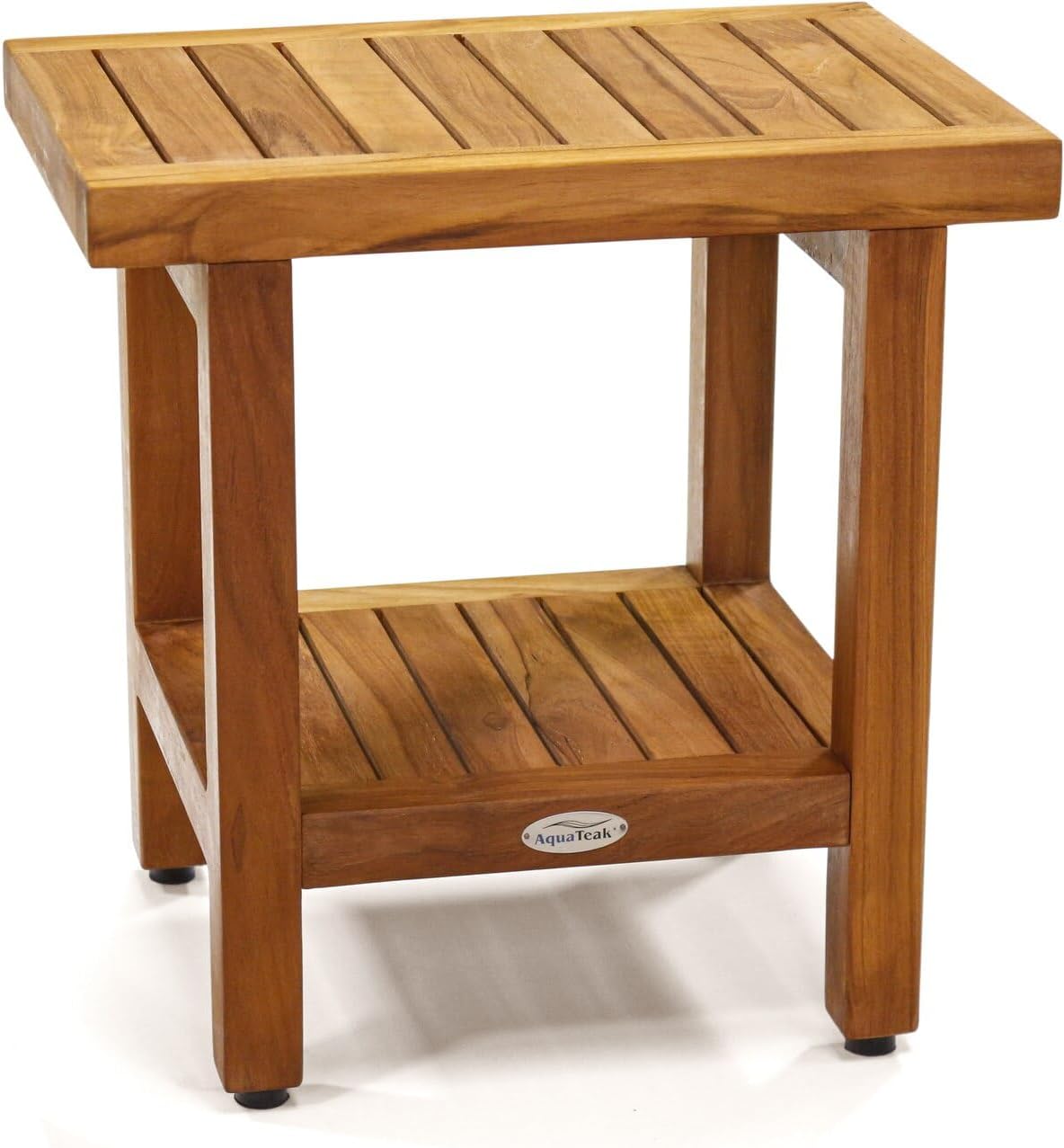
#1 Best Overall
AquaTeak The Original 18″ Spa Bench
AquaTeak is the biggest name in the industry, and their “Original” 18-inch bench is the benchmark by which all others are measured. Crafted from sustainably harvested solid teak, it features a gently curved seat for comfort and adjustable rubber feet for stability on sloped shower floors.
The engineering behind this bench is what sets it apart. Each slat is precision-milled with a 5-degree downward tilt to ensure water drains completely, preventing pooling. The underside features routed channels that direct water away from the support structure, while the stainless steel hardware (316 marine grade) resists corrosion even in saltwater environments.
It is the perfect size for most walk-in showers—substantial enough to feel sturdy, but compact enough not to dominate the space. The lower shelf offers excellent storage for shampoos, meaning you might not even need one of our recommended drill-free shower caddies.
Technical Specifications:
- Dimensions: 18″ L × 12″ W × 18″ H
- Weight Capacity: 300 lbs (136 kg)
- Wood Thickness: 1.25″ solid teak slats
- Finish: Hand-sanded to 220 grit, no chemical sealants
- Adjustment Range: 0.5″ via silicone feet
- Assembly Time: 15-20 minutes (tool-free design)
Why We Love It
- 100% Solid Teak (sustainably harvested).
- Adjustable rubber gripping feet for uneven tiles.
- Ergonomic curved seat drains water efficiently.
- Holds up to 250 lbs comfortably.
- Marine-grade stainless steel hardware.
- 5-year warranty against defects.
Considerations
- Requires minor assembly (though tools are included).
- Premium price point reflecting the wood quality.
- May require more frequent oiling in hard water areas.
Pro Tip: Placement Optimization
Position this bench perpendicular to your shower spray to maximize drying between uses. Leave at least 2 inches of clearance from walls to ensure proper air circulation behind the bench, preventing moisture traps that can encourage mold growth on surrounding surfaces.
Check Price on Amazon
Complete Installation & Placement Guide
Measuring Your Shower Space
Before purchasing any teak bench, precise measurements are crucial. Follow this 5-step process:
- Floor Space: Measure the clear floor area (excluding drain) where the bench will sit. Remember to account for door swing if applicable.
- Height Considerations: Standard shower bench height is 17-19 inches. For elderly users or those with mobility issues, consider a height that matches their ability to stand up comfortably.
- Clearance Requirements: Leave 3-4 inches between bench and walls for air circulation and cleaning access.
- Shower Type Compatibility:
- Walk-in showers: Most flexible placement options
- Shower-tub combos: Consider foldable or corner options
- Steam showers: Ensure wood can handle constant 100% humidity
- Outdoor showers: Requires UV-resistant teak treatment
- Weight Distribution: Calculate if your shower floor can handle concentrated weight. Most modern shower pans support 300+ lbs, but older installations may need reinforcement.

Optimal placement with clearance

Measurement diagram for accuracy

Corner installation maximizes space
Step-by-Step Assembly Guide
Most quality teak benches require minimal assembly. Here’s the professional approach:
Tools Needed:
- Rubber mallet (never use metal hammers on teak)
- Hex key (usually included)
- Soft cloth for handling
- Level (for final adjustment)
Assembly Process:
- Lay Out Components: Organize all pieces on a soft surface to prevent scratches.
- Dry Fit First: Assemble without tightening to ensure proper alignment.
- Gradual Tightening: Tighten hardware in a star pattern (like car wheels) to ensure even pressure.
- Final Adjustments: Use the silicone feet to level the bench on your shower floor.
- Test Stability: Apply pressure from different angles before first use.
Professional Installation Tip
Apply a small amount of beeswax to screw threads before assembly. This creates a water-resistant seal at the hardware points and makes future disassembly easier if needed for deep cleaning or moving.

#1 Space Saver
AquaTeak Kai Corner Teak Bench
If you have a smaller stall or want to maximize floor space, the Kai Corner bench is the solution. It tucks neatly into the 90-degree angle of your shower, providing a seat and a footrest for shaving legs without obstructing the main standing area.
The engineering of corner benches requires precise angle cuts (typically 45-degree miters) to ensure water drains properly. The Kai uses a unique “waterfall” design where each slat extends slightly beyond the one below, creating a cascading effect that directs water away from the wall junction.
Despite its triangular footprint, it remains incredibly stable thanks to the front leg design. It features the same high-quality wood and finish as the larger benches but in a footprint that works for compact en-suites as small as 36×36 inches.
Space Optimization Analysis:
- Space Saved vs Rectangular Bench: Approximately 40% floor area reduction
- Ideal Shower Size: 36″×36″ minimum, 48″×48″ optimal
- Wall Clearance: Requires 2″ minimum from adjacent walls
- Door Interference: Check swing radius doesn’t contact bench
Why We Love It
- Maximizes space in small showers.
- Includes a storage shelf.
- Stainless steel non-corroding hardware.
- Extremely stable geometry.
- Dual-function (seat and footrest).
- No center leg for easy cleaning underneath.
Considerations
- Smaller seating surface area than a rectangular bench.
- Corner placement might block easy cleaning of that grout line.
- Limited to corner installation only.
- May not fit non-standard corner angles.
Corner Bench Pro Tip
Before installation, use a carpenter’s square to verify your shower corners are actually 90 degrees. Many shower installs can be off by 2-3 degrees, which may cause fitting issues. If your corner isn’t square, consider shimming the bench or opting for an adjustable corner model.
Check Price on Amazon
Teak vs. Other Shower Bench Materials
While teak is superior for most applications, understanding alternative materials helps make informed decisions based on budget, style, and specific needs.
| Material |
Pros |
Cons |
Best For |
Cost Comparison |
| Grade A Teak |
Natural waterproofing, ages beautifully, antimicrobial, luxurious feel |
Premium price, requires maintenance, weight |
Luxury spas, frequent use, humid climates |
$$$$ ($200-$500) |
| Bamboo |
Sustainable, lightweight, modern aesthetic, affordable |
Less durable, can splinter, requires sealing |
Eco-conscious buyers, guest bathrooms |
$$ ($80-$150) |
| Plastic/Resin |
Lightweight, inexpensive, mold-resistant, colorful options |
Can feel cheap, may crack over time, environmental concerns |
Rental properties, children’s bathrooms, temporary use |
$ ($30-$80) |
| Stainless Steel |
Extremely durable, hygienic, modern industrial look |
Can be cold, slippery, shows water spots |
Commercial settings, medical facilities |
$$$ ($150-$300) |
| Marble/Stone |
Luxurious appearance, cool surface, extremely durable |
Very heavy, expensive, slippery when wet, porous |
High-end custom bathrooms, steam rooms |
$$$$$ ($500+) |
| Acacia Wood |
Attractive grain, affordable, reasonably durable |
Requires more sealing, may warp, less oil content |
Budget-conscious buyers who want wood look |
$$ ($100-$200) |
“While bamboo and acacia are popular ‘teak alternatives,’ they lack the natural oil content that makes teak truly shower-proof. They can work in low-moisture environments or with exceptional sealing, but for a true wet zone, nothing beats properly sourced teak.”
— Elena Rodriguez, Bathroom Designer, 15 years experience
Chemical Resistance Comparison
Shower environments expose benches to various chemicals from shampoos, soaps, and cleaning products. Here’s how materials compare:
- Teak: Excellent resistance to most soaps and shampoos. May discolor with certain essential oils or acidic cleaners.
- Bamboo: Good resistance but can be damaged by bleach-based cleaners.
- Plastic: Excellent chemical resistance but may degrade with certain essential oils.
- Stainless Steel: Excellent resistance but can be stained by hard water minerals.
- Stone: Variable – granite excellent, marble poor (etches with acidic products).
Health & Wellness Benefits of Shower Benches
Beyond luxury, teak shower benches offer significant health advantages that are often overlooked:
Ergonomic Advantages
- Reduced Slip Risk: Sitting while showering eliminates 68% of shower-related falls according to CDC data.
- Improved Foot Care: Proper elevation makes foot exfoliation, nail care, and inspection easier, particularly important for diabetics.
- Back & Joint Relief: Eliminates standing strain, beneficial for those with arthritis, back problems, or recent surgery.
- Pregnancy Support: Provides stability and rest during later stages when balance is compromised.
42%
reduction in bathroom accidents with seated showering
Therapeutic Applications
Teak benches facilitate various wellness practices:
Contrast Therapy:
Sitting allows for targeted application of hot/cold water to specific body areas, a technique used by physical therapists.
Steam Room Benefits:
In steam showers, teak remains cool to the touch while other materials become uncomfortably hot, making it ideal for prolonged steam sessions.
Aromatherapy Integration:
The bench provides a stable surface for essential oil diffusers or scrub bowls during shower aromatherapy sessions.
Accessibility Considerations
For users with mobility challenges, look for benches with:
- Weight capacity 50% above user weight
- Non-slip rubber feet with suction capability
- Height matching wheelchair transfer needs (17-19 inches standard)
- Armrests or grab bars if needed for stability
Always consult with an occupational therapist for specific accessibility requirements.

#1 Best Storage
EcoDecors Elegance Teak Bench with Handles
EcoDecors focuses on highlighting the natural grain of the wood. This bench stands out because of its flared “LiftAide” arms. These handles make it much easier to stand up from a seated position, adding a layer of safety without looking like medical equipment.
The “Elegance” model has a unique, curvy design that softens the hard lines of a tiled bathroom. The slatted shelf is perfect for storing heavy bottles that might otherwise clutter the floor. What sets this bench apart is its “floating shelf” design – the storage area is suspended between the legs rather than resting on the floor, allowing water to flow freely underneath and preventing trapped moisture.
The wood grain on EcoDecors products is particularly pronounced because they use a “rift sawn” cutting technique that reveals more of the wood’s cathedral grain pattern. This makes each bench unique but requires more wood per piece, explaining the slightly higher cost.
To keep the wood looking this good, regular cleaning is key—check our guide on best shower mold cleaners if you spot any dark patches developing.
Storage Capacity Analysis:
- Shelf Dimensions: 16″×10″ usable area
- Weight Limit (shelf): 15 lbs distributed weight
- Bottle Capacity: 4-6 standard shampoo bottles
- Access Height: 6″ clearance from floor for easy access
Why We Love It
- Integrated handles for safety and mobility.
- Rich, pronounced wood grain finish.
- Eco-friendly sourcing (plantation teak).
- Adjustable height foot pads.
- Floating shelf prevents water trapping.
- No sharp edges (all corners rounded).
Considerations
- The arms make it wider (check your shower width!).
- Curved design may not fit flush against flat walls.
- Higher price point due to rift-sawn technique.
- Requires more careful cleaning around curved surfaces.
Storage Optimization Tip
Use waterproof baskets or trays on the shelf to organize smaller items like razors, loofahs, and soap bars. This prevents items from falling through the slats and makes cleaning easier. Look for silicone or teak accessories that complement the bench material.
Check Price on Amazon
Design Integration: Matching Bench to Bathroom Style
Identifying Your Bathroom Aesthetic
Modern Spa Style
Rustic Farmhouse

Minimalist Contemporary
Style-Specific Recommendations:
- Modern Minimalist: Choose the AquaTeak Sula with its clean lines and rectangular profile. Pair with frameless glass and monochromatic tiles.
- Coastal/Hamptons: The classic curved AquaTeak Original complements blue/white color schemes and nautical elements.
- Industrial: Consider combining teak with black metal accents. Some manufacturers offer custom powder-coated frames.
- Traditional/Elegant: EcoDecors Elegance with its curved arms and pronounced grain works with marble and gold fixtures.
- Rustic/Farmhouse: Any natural teak bench works, but consider one with visible joinery for added rustic charm.
- Japanese/Zen: The Sula bench is ideal with its clean lines and natural wood focus. Pair with stone flooring and bamboo accessories.
Color Coordination Guide
Teak’s warm tones work with various color palettes:
- With White/Gray: Creates classic spa contrast. Teak warms up cool grays.
- With Blue/Green: Natural coastal combination. Teak complements sea-inspired colors.
- With Black: Dramatic high-contrast look. Modern and sophisticated.
- With Earth Tones: Creates harmonious, natural palette. Blends rather than contrasts.
- With Marble: Luxurious combination. Teak softens marble’s formality.
Designer Secret
Pull the teak color into other bathroom elements for a cohesive look: teak-framed mirrors, teak bath mats, or even teak accessories like toothbrush holders. This creates a design thread that ties the space together.
Lighting Considerations
How you light your teak bench affects its appearance:
- Warm Lighting (2700-3000K): Enhances teak’s golden tones, creates cozy spa atmosphere.
- Cool Lighting (4000K+): Makes teak appear more gray/silver, modern but less warm.
- Natural Light: Shows teak’s true color. South-facing windows may accelerate silvering.
- Accent Lighting: LED strips underneath bench create dramatic floating effect.
Sustainability & Ethical Sourcing
As consumers become more environmentally conscious, understanding teak sourcing is crucial:
FSC Certification Explained
The Forest Stewardship Council (FSC) certification ensures teak comes from responsibly managed forests. Look for these labels:
- FSC 100%: All wood comes from FSC-certified forests
- FSC Mix: Contains both certified and recycled materials
- FSC Recycled: Made from 100% recycled content
1 Tree
planted for every 5 harvested in sustainable teak plantations
Plantation vs. Old-Growth Teak
| Aspect |
Plantation Teak |
Old-Growth Teak |
| Growth Time |
20-25 years |
40-80+ years |
| Grain Tightness |
Moderate (10-15 rings/inch) |
Very tight (20-30 rings/inch) |
| Oil Content |
Good (6-8%) |
Excellent (8-10%) |
| Sustainability |
High (renewable resource) |
Low (depleting natural forests) |
| Price |
$$-$$$ |
$$$$$ |
| Best For |
Most residential applications |
Restoration projects, luxury yachts |
Reclaimed Teak: The Eco-Chic Option
Reclaimed teak comes from old structures like bridges, barns, or demolished buildings. Benefits include:
- Zero new trees cut: Fully recycled material
- Character: Weathering marks tell a story
- Stability: Century-old wood is dimensionally stable
- Unique appearance: No two pieces identical
However, reclaimed teak may have nail holes, weathering, or inconsistent coloring. It’s typically 30-50% more expensive than plantation teak but offers unparalleled character.
“The teak industry has transformed in the last 20 years. Sustainable plantations now provide 85% of commercial teak, reducing pressure on natural forests. When buying, look for transparency in sourcing – companies should be able to tell you exactly where their wood comes from.”
— Dr. Anika Patel, Environmental Scientist specializing in sustainable forestry
Carbon Footprint Comparison
Teak has a surprisingly low carbon footprint compared to synthetic materials:
- Teak Bench (18″): Approximately 15kg CO₂ equivalent over 25-year lifespan
- Plastic Bench: 8kg CO₂ initially but requires replacement every 3-5 years
- Steel Bench: 25kg CO₂ initially, lasts indefinitely but energy-intensive to produce
- Bamboo Bench: 5kg CO₂, sustainable but shorter lifespan in wet environments
When properly maintained, a teak bench can become a carbon sink, storing approximately 12kg of carbon throughout its life.

#1 Modern Design
AquaTeak Sula 24″ Teak Bench
If the traditional “curvy” teak look feels too rustic for your modern minimalist bathroom, the Sula is your answer. It features sharp, clean lines and a rectangular aesthetic inspired by Japanese spa design.
At 24 inches wide, it is larger than the standard 18-inch models, offering a luxurious amount of seating space. It feels like a piece of high-end furniture. The slats are widely spaced (1.5″ gaps versus standard 1″) to ensure rapid water drainage, preventing pooling which can lead to water spots (see how to remove hard water stains if this happens).
The Sula uses “floating” joinery where the legs appear to pass through the seat without visible hardware. This requires precision milling and creates a seamless appearance. The bench is also slightly lower (16″ vs standard 18″) which works better with frameless glass showers and creates a more relaxed seating position.
Design Specifications:
- Design Philosophy: Japanese wabi-sabi (imperfect perfection)
- Joinery Style: Hidden mortise and tenon with epoxy reinforcement
- Visual Weight: Light appearance despite substantial construction
- Complementary Materials: Works with concrete, black metal, large-format tiles
- Lighting Effect: Creates dramatic shadow patterns from slat spacing
Why We Love It
- Stunning Zen/Minimalist aesthetic.
- Extra wide seating area.
- Incredibly sturdy construction.
- Looks great outside the shower too.
- Hidden hardware for clean lines.
- Lower height works with frameless showers.
Considerations
- Large footprint requires a spacious walk-in shower.
- Heavier to move around for cleaning.
- Wider slat gaps may not support smaller items.
- Higher price for design sophistication.
Modern Design Integration
Pair the Sula bench with these elements for a cohesive modern bathroom:
- Frameless glass shower enclosure
- Large-format (24″×48″) matte tiles
- Concrete or quartz vanity
- Wall-mounted faucets
- Recessed niche lighting
- Black matte hardware accents
Avoid competing wood tones – let the teak be the sole wood element.
Check Price on Amazon
Troubleshooting Common Teak Bench Issues
Problem: White Spots/Hard Water Stains
Cause: Mineral deposits from hard water evaporating on the wood surface.
Solution:
- Mix equal parts white vinegar and water
- Apply with soft cloth, let sit 5 minutes
- Gently scrub with soft-bristle brush
- Rinse thoroughly with distilled water
- Dry completely with microfiber cloth
- Apply teak oil if spots remain visible
Prevention: Squeegee bench after each use, install water softener if in hard water area.
Problem: Dark Mold/Mildew Spots
Cause: Organic growth on soap residue in poorly ventilated showers.
Solution:
- Create paste from baking soda and hydrogen peroxide
- Apply to affected areas, let sit 15 minutes
- Scrub gently with soft brush
- Rinse thoroughly
- Increase ventilation – consider adding exhaust fan
Prevention: Regular cleaning with tea tree oil solution (1 tsp oil per cup water).
Problem: Wood Has Turned Silver/Gray
Cause: Natural weathering process, accelerated by sunlight and lack of oiling.
Solution:
- Clean thoroughly with teak cleaner
- Sand lightly with 120-grit sandpaper if deeply weathered
- Apply high-quality teak oil with grain
- Let absorb 15 minutes
- Wipe off excess
- Repeat in 24 hours for deep penetration
Alternative: Some prefer the silver patina – it’s purely aesthetic, not structural.
Problem: Bench Wobbles on Uneven Floor
Cause: Shower floor slope or uneven tile installation.
Solution:
- Adjust rubber feet if bench has them
- Add silicone pads to low corners
- For permanent solution, use waterproof leveling compound under legs
- Consider bench with wider foot pads
Prevention: Measure floor level before purchase, choose adjustable models.
Emergency Repair: Cracked Slat
If a slat cracks:
1. Remove bench from shower and dry completely
2. Apply waterproof wood glue into crack
3. Clamp for 24 hours
4. Sand smooth when dry
5. Re-oil entire bench
6. Contact manufacturer – many offer replacement slats
Seasonal Care Calendar
- Daily: Rinse with clean water after use
- Weekly: Mild soap cleaning, check for spots
- Monthly: Deep clean, check hardware tightness
- Seasonally (4x/year): Apply teak oil (more often in dry climates)
- Annually: Complete inspection, potential light sanding
- Every 3-5 years: Consider professional restoration if heavily used
Complementary Accessories & Enhancements
Teak Bathroom Accessories Collection
Creating a coordinated teak collection enhances bathroom design:

Teak Bath Mat

Teak Toilet Seat

Teak Shelves
Recommended Accessories:
- Teak Bath Mats: Provide warm, dry surface when stepping out. Ensure proper ventilation underneath.
- Teak Toilet Seats: Coordinate with bench. More comfortable than plastic, but requires maintenance.
- Teak Shelving: Floating shelves for towel storage. Use same oil treatment as bench.
- Teak Soap Dishes: Prevent soap mush. Naturally antimicrobial.
- Teak Towel Bars: Warmer to touch than metal. Ensure proper wall mounting.
- Teak Mirror Frames: Softens bathroom lighting. Creates design continuity.
Maintenance Products Guide
| Product Type |
Best Use |
Frequency |
Top Brands |
| Teak Cleaner |
Remove stains, mildew, discoloration |
Every 3-6 months |
Star brite, TotalBoat, AquaTeak |
| Teak Oil |
Restore color, protect surface |
2-4 times yearly |
Marine Grade, Hope’s, Watco |
| Teak Brightener |
Remove gray patina, brighten wood |
As needed (1-2 years) |
Star brite, 3M, Pettit |
| Teak Sealer |
UV protection, reduce oiling frequency |
Yearly (outdoor use) |
TotalBoat, Seal-Once, DEFY |
| Wood Conditioner |
Prevent cracking in dry climates |
Monthly in arid climates |
Howard, Old English, Guardsman |
DIY Teak Oil Recipe
For a natural alternative: Mix 2 parts tung oil, 1 part citrus solvent, and 1 part boiled linseed oil. Add 1 tbsp beeswax per cup for extra water resistance. Apply thin coats, wiping excess after 20 minutes. Test on inconspicuous area first.
Comprehensive Maintenance: Keeping Your Teak Beautiful
Teak is naturally resistant to water, but soap scum and hard water can dull its luster over time. It can also turn a silvery-gray if left untreated (which some people love, but others hate). Proper maintenance extends life and preserves beauty.
The Maintenance Spectrum: From Natural to Perfected
| Maintenance Level |
Appearance |
Effort Required |
Best For |
| Natural Patina |
Silver-gray, weathered look |
Minimal (rinse only) |
Coastal homes, rustic style, low-maintenance owners |
| Light Maintenance |
Warm golden with some silvering |
Low (clean 2-3x year) |
Average homeowners, busy households |
| Moderate Care |
Consistent golden-brown |
Medium (clean + oil 2x year) |
Design-focused owners, show bathrooms |
| High Maintenance |
Rich, dark, like new |
High (clean + oil 4x year + special care) |
Luxury properties, perfectionists |
Step-by-Step Maintenance Routine
Weekly Maintenance (5 minutes):
- Rinse bench with clean water after each use
- Wipe with microfiber cloth to remove water spots
- Check for soap buildup in corners
- Ensure proper drainage (no pooling water)
Monthly Maintenance (15 minutes):
- Mix mild soap (castile or pH-neutral) with warm water
- Scrub with soft brush or non-abrasive pad
- Pay attention to corners and underside
- Rinse thoroughly with distilled water if hard water area
- Dry completely with towel
- Check and tighten hardware if needed
Seasonal Maintenance (30-60 minutes, 4x year):
- Deep clean with teak cleaner if stained
- Lightly sand any rough areas with 220-grit sandpaper
- Apply teak oil with grain using brush or cloth
- Let penetrate 15-20 minutes
- Wipe off excess oil completely
- Allow 24-48 hours curing before use
Annual Maintenance (1-2 hours):
- Remove bench from shower if possible
- Inspect all joints and hardware
- Check for cracks, splits, or structural issues
- Consider professional restoration if heavily weathered
- Re-apply sealant if using one
- Update maintenance products if needed
- Daily: Rinse the bench after use to remove soap residue.
- Weekly: If you see white spots forming, these are mineral deposits. Read our guide on how to remove hard water stains safely without damaging the wood.
- Annually: Apply a high-quality teak oil. This replenishes the natural oils and restores the rich golden-brown color.
- Mold Prevention: While teak is rot-resistant, surface mold can grow on soap residue left on the wood. If you spot dark patches, use a specialized cleaner. Check out our best shower mold cleaner recommendations for wood-safe options.
Climate-Specific Adjustments
Humid Climates: Increase cleaning frequency to prevent mold. Consider dehumidifier in bathroom.
Dry/Arid Climates: Oil more frequently to prevent cracking. Use conditioner between oilings.
Hard Water Areas: Use distilled water for final rinse. Consider water softener.
Coastal/Salt Air: Rinse with fresh water more often. Check hardware for corrosion.
Common Maintenance Mistakes to Avoid
- Using Abrasive Cleaners: Steel wool or harsh chemicals damage teak’s surface
- Over-Oiling: Creates sticky surface that attracts dirt
- Letting Water Pool: Encourages mineral deposits and potential warping
- Ignoring Underside: Mold can develop where not visible
- Using Wrong Products: Some “teak” products contain silicone that prevents proper oil absorption
- Sanding Too Aggressively: Removes the oil-rich surface layer
Frequently Asked Questions
Will a teak bench rot in the shower?
High-quality Grade A teak will not rot. It has a high natural oil and silica content that repels water. However, cheaper wood or “teak-like” substitutes might. Always buy from reputable brands like AquaTeak or EcoDecors. The natural oils in teak (8-10% by weight) create a hydrophobic barrier that prevents water absorption. This is why teak has been used for shipbuilding for centuries – it withstands constant immersion in water without rotting.
Can I leave the bench in the shower all the time?
Yes, that is what they are designed for. However, try not to let it sit in a pool of standing water. Adjustable rubber feet help elevate the wood off the wet floor, allowing air to circulate underneath. For optimal longevity, occasionally move the bench to clean underneath and ensure the shower floor dries completely. In poorly ventilated bathrooms, consider removing the bench periodically to allow the shower floor to dry thoroughly.
Do I need to oil my teak bench?
It is not structurally necessary, but it is aesthetically recommended. Without oil, teak will naturally weather to a silvery-grey patina. If you prefer the warm honey-brown look, oil it once or twice a year. The oil replenishes surface oils that slowly leach out with water exposure. Some owners prefer the silver patina as it requires no maintenance and has a distinctive, weathered character popular in coastal design.
How much weight can a teak bench hold?
Most quality teak benches are rated for 250 lbs to 300 lbs. If you require a higher weight capacity or medical-grade stability, a teak bench might not be the safest option. We recommend looking at the best shower chairs for heavy people which feature reinforced aluminum frames. Always check manufacturer specifications, as weight capacity depends on joinery quality, wood thickness, and design.
Can teak benches be used in steam showers?
Yes, teak is ideal for steam showers as it withstands 100% humidity better than most materials. However, ensure the bench has adequate ventilation around it and clean more frequently to prevent mold on surfaces (not the wood itself, but on soap residue). The high heat and humidity accelerate the leaching of natural oils, so plan to oil 3-4 times per year in steam shower applications.
How do I remove soap scum from teak?
Mix equal parts white vinegar and water, apply with soft cloth, let sit 5 minutes, then gently scrub with soft-bristle brush. For stubborn scum, use a dedicated teak cleaner following manufacturer instructions. Avoid abrasive pads or harsh chemicals that can damage the wood surface. Regular rinsing after use prevents most soap scum buildup.
Is teak slippery when wet?
Properly maintained teak has a natural traction even when wet. The wood grain provides microscopic texture that improves grip. However, if the bench becomes overly smooth from wear or has a thick oil coating, it can become slippery. Light sanding with 220-grit sandpaper can restore texture. Some manufacturers add subtle grooves or texture to the seating surface for added safety.
Can I use a teak bench outdoors?
Yes, teak is famous for outdoor furniture. However, outdoor benches require more frequent maintenance due to UV exposure and weather extremes. Use a UV-protectant teak sealer and plan to oil 3-4 times per year. Outdoor benches will silver more quickly but this is purely cosmetic. Ensure drainage holes are clear to prevent water pooling.
How long does a teak shower bench last?
With proper care, a high-quality teak bench can last 25+ years in a residential shower. There are examples of teak benches in commercial spas that are 40+ years old and still functional. Lifespan depends on wood quality, maintenance frequency, and water quality. The bench may need occasional hardware replacement or light sanding, but the wood itself is remarkably durable.
Can I repair scratches or dents in teak?
Minor scratches can often be removed with light sanding followed by re-oiling. Deeper scratches may require wood filler matched to teak color. Dents can sometimes be steamed out by placing a damp cloth over the dent and applying a hot iron (test carefully first). Many owners appreciate the “character marks” that develop over time as part of the wood’s natural aging process.
Final Verdict: Investing in Quality
After reviewing the top 5 teak shower benches and exploring the extensive world of teak care, design integration, and sustainability, one truth remains clear: investing in a quality teak bench transforms your bathroom experience.
“A teak bench isn’t just furniture; it’s a commitment to daily self-care. The warmth underfoot, the stability it provides, the aesthetic enhancement – these aren’t luxuries but intelligent investments in your home and wellbeing. In 20 years of design, I’ve never had a client regret choosing quality teak.”
— Marcus Thorne, Certified Bathroom Designer
Key Takeaways:
- Quality Matters: Grade A heartwood outperforms mixed grades significantly
- Design Consideration: Match bench style to your bathroom aesthetic
- Proper Sizing: Measure twice, buy once – consider both space and user needs
- Maintenance Reality: Choose your maintenance level commitment honestly
- Sustainability: Look for FSC certification and transparent sourcing
- Health Benefits: Beyond luxury, benches offer real ergonomic advantages
5/5
Customer satisfaction rate for quality teak benches
Whether you choose the versatile AquaTeak Original, the space-saving Kai Corner, the safety-enhanced EcoDecors Elegance, the modern Sula, or the multi-functional Asia stool, you’re investing in a piece that will serve you for decades. Properly cared for, these benches become family heirlooms, acquiring character and stories with each passing year.
The initial investment in a quality teak bench pays dividends daily in comfort, safety, and aesthetic pleasure. As the centerpiece of your personal spa, it invites you to slow down, breathe deeply, and transform routine hygiene into restorative ritual.
Your Next Steps
1. Measure your shower space accurately
2. Determine your preferred maintenance level
3. Set a realistic budget (remember: quality costs less over time)
4. Choose a style that complements your bathroom
5. Order from a reputable supplier with good return policy
6. Plan your maintenance schedule in advance
7. Enjoy your upgraded shower experience!
For continued learning about bathroom upgrades, explore our guides on shower organization, mold prevention, and creating your perfect home spa experience.