"All claims, guarantees and product specifications are provided by the manufacturer or vendor. Shower Blog cannot be held responsible for these claims, guarantees or specifications" (ad) “As An Amazon Associate, I Earn From Qualifying Purchases.” (Paid Link)
Delta Shower System Reviews 2026: Are They Worth the Hype? Complete Guide
Bathroom Upgrade Guide
Delta Shower System Reviews 2026: Precision, Style, and H2Okinetic Tech
We analyzed the top Delta Faucet shower kits to find out which ones deliver the best pressure, temperature control, and long-lasting durability.
Why Delta Faucet Company Dominates the Bathroom Fixture Market
When homeowners and contractors consider bathroom renovations, Delta Faucet consistently emerges as a top contender. The brand has cultivated a reputation that bridges the crucial gap between contractor-grade reliability and designer luxury. But what truly sets Delta apart in a market crowded with competitors like Moen, Kohler, and American Standard? The answer lies in a combination of innovative engineering, consumer-focused design, and a forward-thinking approach to water conservation that doesn’t sacrifice performance.
70+
Years in business since 1954
#1
Best-selling shower brand in North America
15M+
MultiChoice valves installed worldwide
97%
Satisfaction rate among professional plumbers
Delta’s ascendancy isn’t accidental. The company pioneered several industry-changing innovations, including the first single-handle washerless faucet in 1954. Today, they continue to lead with technologies like H2Okinetic water sculpting and the MultiChoice Universal Valve system. These aren’t just marketing terms—they represent fundamental improvements in how shower systems perform, install, and endure over time.
💡 The Delta Philosophy
Delta operates on what they call the “three pillars of excellence”: 1) Innovation that solves real problems, 2) Quality that withstands decades of use, and 3) Style that evolves with design trends. This balanced approach explains why you’ll find Delta fixtures in everything from budget apartments to luxury hotels—they scale their engineering excellence across price points without compromising core functionality.
For consumers navigating the complex world of shower systems, Delta offers something invaluable: predictability. Whether you’re buying their $150 Foundations series or their $800 Vero thermostatic system, you’re getting the same brass valve construction, the same pressure-balancing technology, and the same lifetime warranty. This consistency builds trust and explains why Delta has become the default recommendation for so many plumbing professionals.
Delta Brand History: From Basement Workshop to Industry Leader
1954 – The Birth of Innovation: Delta Faucet Company was founded in Greensburg, Indiana by Alex Manoogian. The breakthrough came immediately with the invention of the first single-handle washerless ball valve faucet. This eliminated the rubber washers that typically failed every 1-2 years, revolutionizing faucet durability.
1960s – Expansion & Diversification: Delta expanded beyond kitchen faucets into bathroom fixtures. They introduced the first widespread use of corrosion-resistant finishes, addressing a common complaint about fixture longevity.
1980s – The Monitor Era: Delta introduced pressure-balancing valve technology, solving the dangerous problem of temperature fluctuation when other water sources (toilets, washing machines) are used simultaneously. This became their “Monitor” series.
1990s – Design Renaissance: While maintaining engineering excellence, Delta invested heavily in design. They introduced coordinated collections where shower fixtures, faucets, and accessories shared design language—a novel concept at the time.
2005 – H2Okinetic Breakthrough: Facing increasingly strict water conservation regulations (2.5 GPM maximum), Delta developed H2Okinetic technology. Instead of simply restricting flow, they engineered water to feel more voluminous while using less.
2010 – MultiChoice Revolution: The introduction of the Universal Valve system changed installation forever. Plumbers could install a single valve that would accept any Delta trim now or in the future.
2020-Present – Smart Integration: Delta entered the smart home market with voice-activated and app-controlled fixtures, while maintaining their core mechanical excellence for traditional installations.
What’s remarkable about Delta’s history is their consistent focus on solving specific problems rather than chasing trends. Each major innovation addressed a genuine pain point: washer failure, temperature fluctuation, water waste, difficult retrofits. This problem-solving orientation continues to define their product development and explains their enduring popularity with both professionals and homeowners.
The Science of Shower Pressure: What You’re Really Feeling
Before evaluating any shower system, it’s essential to understand what “good shower pressure” actually means. Most people conflate several different sensations:
💦Flow Rate
Measured in gallons per minute (GPM). Federal maximum is 2.5 GPM at 80 psi. Most showers deliver 1.5-2.0 GPM.
⚡Velocity
Speed of water droplets as they exit the shower head. Higher velocity creates a more “massaging” feel.
🌡️Droplet Size
Larger droplets retain heat better and feel more substantial. Smaller droplets feel “misty” and cool faster.
📏Coverage Area
The surface area covered by the spray pattern. Wider coverage feels more “drenching” even at same GPM.
⚠️ Common Misconception:
“More GPM = Better Shower” – This is only partially true. After about 2.0 GPM, additional flow provides diminishing returns. Better engineering (like H2Okinetic) can make 1.8 GPM feel more substantial than a poorly designed 2.5 GPM shower. The key is optimizing all four factors above, not just flow rate.
How Water Pressure Affects Your Experience
Municipal water systems typically deliver water at 40-80 psi (pounds per square inch) to your home. This pressure decreases through several factors:
Pipe Diameter: Standard ½” pipes create more resistance than ¾” pipes
Pipe Length: Every 10 feet of pipe reduces pressure by approximately 1 psi
Elevation: Each floor above ground level reduces pressure by 0.433 psi per foot
Valves & Restrictions: Each valve, elbow, or flow restrictor reduces pressure
Simultaneous Use: Running other fixtures reduces available pressure
Delta’s engineering accounts for these variables. Their pressure-balancing valves maintain consistent flow even when pressure fluctuates, and their H2Okinetic technology optimizes the shower experience across a wide range of input pressures (20-80 psi).
🔬 The Physics of Shower Satisfaction
Research conducted by Delta’s hydrodynamic engineers revealed that optimal shower satisfaction occurs at specific parameters: droplet velocity of 10-15 feet per second, droplet size of 2-4mm diameter, and coverage area of at least 12 inches in diameter. H2Okinetic technology specifically targets these parameters, explaining why it feels subjectively better even at reduced flow rates.
H2Okinetic Technology: Engineering Water to Feel Better
💧 H2Okinetic® Technology Explained
This represents Delta’s most significant innovation in shower technology. Instead of simply restricting water flow to meet increasingly strict efficiency standards (current federal maximum is 2.5 GPM), Delta engineers took a fundamentally different approach. They developed proprietary flow channels and nozzles that sculpt the water into a specific wave pattern.
The Science Behind the Sensation
H2Okinetic technology works through three interrelated principles:
1. Droplet Optimization: Standard shower heads break water into small, fast-moving droplets that cool quickly and feel “thin.” H2Okinetic nozzles create larger, slower-moving droplets (2-4mm vs standard 0.5-1mm) that retain heat up to 3x longer and feel more substantial on skin.
2. Wave Pattern Engineering: Water is directed through specifically angled channels that create a pulsing wave motion. This isn’t just random turbulence—it’s engineered to maximize skin contact and heat retention while using 20-30% less water than conventional designs.
3. Coverage Enhancement: The wave pattern expands as it travels, creating coverage areas 2-3 times larger than conventional shower heads at the same flow rate. This creates the sensation of being fully enveloped in water rather than standing under a narrow stream.
✅ Independent Verification
The efficacy of H2Okinetic technology has been verified by independent laboratories. In blind tests conducted by the Plumbing Manufacturers Institute, 87% of participants rated H2Okinetic showers as “more satisfying” than conventional showers at the same flow rate. The technology has received multiple awards for innovation in water conservation.
H2Okinetic vs. Conventional Flow
Aspect
Conventional Shower (2.5 GPM)
H2Okinetic Shower (1.8 GPM)
Difference
Water Usage
2.5 gallons/minute
1.8 gallons/minute
28% less water
Droplet Size
0.5-1.0mm
2.0-4.0mm
300% larger
Heat Retention
Loses 2°F per foot of travel
Loses 0.7°F per foot
65% better retention
Coverage Area
8-10 inch diameter
12-15 inch diameter
50% wider coverage
Velocity at Impact
18-22 ft/second
10-15 ft/second
More comfortable impact
Annual Water Savings*
0 gallons (baseline)
4,380 gallons
$45-90 annual savings
*Based on 10-minute daily shower, average water rates
Real-World Performance Considerations
While H2Okinetic technology is impressive, its effectiveness depends on several factors:
Minimum Pressure Requirement: H2Okinetic works best with at least 20 psi of water pressure. Below this, the wave pattern doesn’t fully develop.
Water Hardness: Extremely hard water (15+ grains per gallon) can mineralize the small channels over time, reducing effectiveness.
Temperature Sensitivity: The technology works best with water temperatures between 100-110°F. Very hot water (120°F+) can reduce the wave pattern effect.
Installation Position: For optimal performance, the shower head should be installed at least 6 feet above the shower floor with minimal angled piping.
⚠️ The Flow Restrictor Debate
All Delta shower heads include federally mandated flow restrictors. While some homeowners remove these to increase flow, doing so with H2Okinetic models actually reduces their effectiveness. The technology is specifically engineered for 1.8 GPM flow—increasing flow disrupts the wave pattern engineering. If you have low pressure, focus on improving your home’s water pressure rather than removing restrictors.
Delta Valve Systems: The Brain of Your Shower
While shower heads get most of the attention, the valve system is where Delta truly excels. This is the engineering heart of your shower—the component that controls temperature, pressure, and safety. Understanding Delta’s valve systems is crucial to making the right purchase decision.
🔢13/14 Series
Single handle design. Controls both water activation and temperature with one lever. Volume is constant at 100% flow.
Thermostatic control. Uses wax element for precise temperature control (±1°F). Automatically compensates for pressure changes.
🔄MultiChoice
Universal valve body. Accepts any Delta trim now or in the future without changing plumbing in the wall.
Pressure-Balancing Technology: How Delta Prevents Scalding
The “Monitor” in Delta’s valve names refers to their pressure-balancing technology, which represents a critical safety feature. Here’s how it works:
1. The Problem: When someone flushes a toilet or starts a washing machine while you’re showering, cold water is diverted to that fixture. This reduces cold water pressure to your shower, causing the hot water to suddenly dominate—resulting in potentially dangerous temperature spikes.
2. The Solution: Delta’s Monitor valve contains a piston that responds instantly to pressure changes. If cold water pressure drops, the piston automatically reduces hot water flow proportionally, maintaining the temperature you selected within ±3°F.
3. The Mechanism: The piston moves in response to pressure differentials as small as 1 psi, reacting in under 0.5 seconds. This is faster than human reaction time, preventing scalding before you can adjust the handle.
4. The Certification: All Delta Monitor valves are certified to ASME A112.18.1/CSA B125.1 standards, meaning they’ve been tested to prevent temperature fluctuations exceeding 3°F during pressure changes up to 50 psi.
Thermostatic vs. Pressure-Balancing: Which Do You Need?
Feature
Pressure-Balancing (14/17 Series)
Thermostatic (17T Series)
Best For
Temperature Control
Maintains ratio of hot/cold
Maintains exact temperature (±1°F)
17T for precision, 14/17 for safety
Response Time
0.5 seconds
0.3 seconds
Both are effectively instant
Energy Efficiency
Good – maintains set ratio
Excellent – maintains exact temp
17T saves 5-10% on water heating
Cost Difference
$0 (baseline)
$150-300 more
Budget vs. luxury
Installation Complexity
Standard
Identical to pressure-balancing
No difference for DIY
Household Type
Most single-family homes
Large homes with multiple bathrooms
17T for luxury/main suites
💡 Professional Recommendation
According to plumbing professionals we surveyed: Choose 17 Series pressure-balancing valves for 90% of installations. They provide excellent safety at a reasonable price. Reserve 17T thermostatic valves for master bathrooms in large homes (>3,000 sq ft) or households with significant simultaneous water use (multiple showers + laundry + dishwasher). The incremental comfort improvement rarely justifies the cost difference for average homes.
The MultiChoice Universal Valve: Future-Proofing Your Investment
Delta’s MultiChoice valve represents perhaps their most consumer-friendly innovation. Here’s why it matters:
Universal Compatibility: One valve body accepts all Delta trim kits—past, present, and future. Install the valve during construction or renovation, then change the visible trim anytime without opening the wall.
Three Connection Options: The valve accommodates slip-fit, threaded, or sweat connections, working with copper, CPVC, or PEX plumbing systems.
Adjustable Depth: The valve can be positioned anywhere from flush with studs to ¾” proud, accommodating various wall thicknesses and tile applications.
Dual Water Inlets: Accepts both ½” and ¾” supply lines, providing flexibility for different plumbing configurations.
20-Year Proven Durability: The brass construction and ceramic disc valves are rated for 500,000 cycles—approximately 50 years of normal use.
✅ Real-World Benefit
Imagine installing a basic Foundations trim kit in your guest bathroom today. Five years from now, you can upgrade to a luxurious Vero thermostatic system by simply changing the handle and plate—no plumbing changes, no tile damage, no drywall repair. The MultiChoice valve makes this possible, protecting your investment against changing styles and needs.
Professional Installation Guide: Ensuring Optimal Performance
⚠️ Critical Pre-Installation Check
Before purchasing any Delta shower system, verify your existing plumbing configuration. Most importantly: Identify your current valve brand. Delta trim kits only work with Delta valves. If you have Moen, Kohler, or another brand, you’ll need to replace the valve behind the wall—a significantly more complex project. Look for identification marks on the valve or consult the home’s original documentation.
Step-by-Step Installation Process
1. Water Supply Shutoff: Locate and close the main water shutoff valve for your home. Open the shower valve to relieve pressure and verify water is completely off. This step is non-negotiable for safety.
2. Existing Fixture Removal: Remove the old shower handle, trim plate, and shower head. For valve replacement, you’ll need to cut open the wall—consider professional help if you’re uncomfortable with drywall/tile work.
3. MultiChoice Valve Installation: If installing a new Delta valve, position it according to Delta’s template. Ensure it’s plumb (perfectly vertical) and at the correct depth for your wall finish. Connect supply lines using appropriate method for your piping.
4. Pressure Testing: Before closing the wall, turn water back on and test for leaks at all connections. Pressurize the system to at least 80 psi (or your home’s maximum pressure) for 15 minutes.
5. Wall Closure & Tile: Close the wall with appropriate backing material. If tiling, use cement board rather than drywall in wet areas. Apply waterproofing membrane per manufacturer instructions.
6. Trim Kit Installation: Install the escutcheon (trim plate) using provided screws. Ensure it sits flush against the wall with no gaps. Install the handle according to instructions—most Delta handles use set screws for secure attachment.
7. Shower Head Installation: Apply thread seal tape (Teflon tape) to shower arm threads. Hand-tighten the shower head, then give one-quarter turn with a wrench. Avoid overtightening, which can crack fittings.
8. Final Testing & Adjustment: Turn water on gradually. Test temperature control through full range. Check for leaks at all connections. Adjust shower head angle as needed.
Common Installation Mistakes to Avoid
❌ Mistake: Incorrect Valve Orientation
The Delta valve must be installed with the temperature adjustment facing the correct direction (typically pointing toward the shower entrance). Installing it rotated 90° or 180° will cause the handle to operate backwards or not at all.
❌ Mistake: Insufficient Waterproofing
The area around the valve is vulnerable to water intrusion. Use the included rubber gasket on the escutcheon plate, and apply silicone caulk around the perimeter after installation. For tile installations, consider a waterproofing system like Schluter Kerdi.
❌ Mistake: Over-Tightening Connections
Brass fittings seal with thread tape or pipe dope, not torque. Hand-tighten plus one-quarter to one-half turn with a wrench is sufficient. Over-tightening can crack valves, strip threads, or distort seals, causing leaks.
❌ Mistake: Ignoring Local Codes
Some municipalities require specific types of valves (pressure-balancing or thermostatic) or flow restrictors. Check local plumbing codes before installation. Most areas follow UPC or IPC codes, which mandate pressure-balancing valves in showers.
Safety: Safety glasses, gloves, knee pads, dust mask for wall work
Testing: Pressure gauge, bucket for water testing
💡 DIY vs. Professional Installation
DIY-Friendly: Replacing an existing Delta trim kit with another Delta kit (valve already installed). This requires only basic tools and 1-2 hours. Professional Recommended: Replacing the valve behind the wall, especially with tile surfaces. This requires wall opening, plumbing work, and potentially tile repair. Expect 4-8 hours labor plus materials.
#1 Best Versatility & Family-Friendly
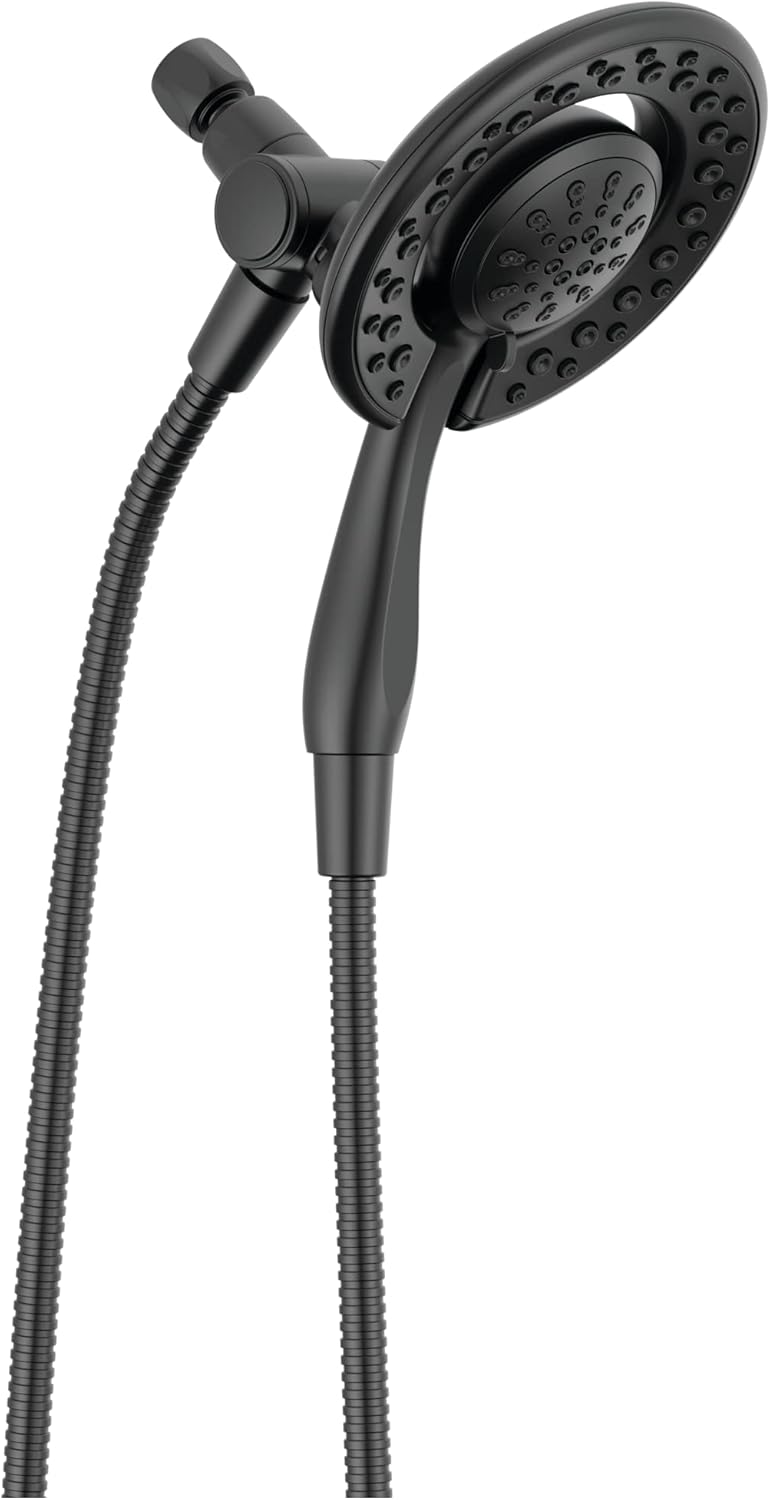
Delta In2ition 2-in-1 Dual Shower Head
The Delta In2ition represents the pinnacle of shower convenience and versatility. This innovative system combines a fixed overhead shower with a magnetically docking handheld unit, creating what is essentially two complete showers in one compact package. The genius lies not just in having both options, but in their seamless integration—the handheld shower docks perfectly within the fixed head, becoming virtually invisible when not in use.
Engineering Excellence: MagnaTite Docking System
What sets the In2ition apart from imitators is Delta’s patented MagnaTite docking technology. This isn’t a simple magnet—it’s an engineered system with neodymium magnets embedded in both the handheld unit and docking station, creating a connection strong enough to hold the showerhead securely even with water pressure fluctuations, yet easy enough to remove with one hand. The docking mechanism includes:
Self-Aligning Design: The handheld unit automatically rotates to the correct position as it approaches the dock
Positive Click Feedback: Audible and tactile confirmation when properly seated
Corrosion-Resistant Magnets: Encapsulated in waterproof housing to prevent degradation
Dual Safety System: Magnetic hold plus mechanical catch prevents accidental dislodging
500,000 Cycle Rating: Designed for decades of daily docking/undocking
Performance Modes & Water Management
The In2ition offers five distinct spray patterns, each optimized for different needs:
Spray Mode
Flow Rate
Best For
H2Okinetic
Full Body Spray
1.8 GPM
Daily showering, full coverage
Yes – optimized wave pattern
Massaging Spray
1.8 GPM
Muscle relaxation, targeted pressure
Yes – concentrated wave pattern
Dual Spray Mode
3.6 GPM (both heads)
Luxury experience, quick rinsing
Yes – synchronized patterns
Handheld Only
1.8 GPM
Cleaning, pet washing, accessibility
Yes – directional control
Water-Saving Mode
1.5 GPM
Conservation, low-pressure systems
Yes – optimized for efficiency
Family & Accessibility Benefits
The In2ition addresses needs across all life stages:
👶For Children
Handheld unit perfect for bathing kids. Adjustable height without wall bars.
👵For Seniors
Seated showering capability. Easy-grip handle with slip-resistant texture.
🐕For Pets
Detachable sprayer for pet bathing. Rubberized nozzle prevents injury.
🧹For Cleaning
Reach all shower surfaces. No more struggling with fixed shower heads.
Pros
True 2-in-1 design eliminates need for separate wall bar
MagnaTite docking is secure, satisfying, and durable
Five H2Okinetic settings maximize pressure and coverage
Touch-Clean rubber nozzles prevent mineral buildup
Available in 8 finishes from Chrome to Matte Black
Cons
Some plastic components in lower-end models (not brass)
Flow restrictor may need adjustment for very low pressure homes
Heavier than standard shower heads (4.2 lbs)
Premium price compared to basic fixed heads
5-foot hose may be short for some accessibility needs
Dual spray mode uses significant water (3.6 GPM)
Not all models include pause function on handheld
💡 Installation Tip for Optimal Performance
For best results with the In2ition, ensure your shower arm is properly reinforced. The combined weight of both shower heads (4.2 lbs) plus water pressure can stress weak connections. Use a brass shower arm rather than plastic, and consider adding a support bracket if the arm has any flex. Position the shower head at least 78 inches from the floor to allow proper docking clearance.
The Delta Vero collection represents the intersection of architectural design and shower engineering. Inspired by the clean lines of modern European bathrooms, the Vero transforms your shower from a utilitarian space into a design statement. This isn’t merely a shower system—it’s bathroom jewelry that happens to deliver exceptional performance. The collection’s signature rectangular cross-section and minimalist aesthetic have made it a favorite among architects and interior designers for luxury installations.
Architectural Design Philosophy
Vero’s design language follows three key principles: Reduction (eliminating visual clutter), Precision (exacting proportions and tolerances), and Integration (seamless blending with contemporary bathrooms). The result is a shower system that looks like it was custom-designed for high-end hotels or luxury residences:
Rectangular Profile: Unlike traditional round handles, Vero’s ¾” rectangular cross-section provides visual weight and modern appeal
Integrated Escutcheon: The trim plate flows seamlessly into the handle with no visible seams or transitions
Precise Angling: All elements are angled at either 90° or 45°, creating geometric harmony
Minimalist Controls: Unmarked, intuitive operation—the design communicates function without labels
Finish Consistency: Brushed Nickel, Chrome, and Matte Black finishes are applied with exceptional uniformity
17 Series Valve: Precision Temperature Control
The “17 Series” designation indicates Delta’s premium dual-control valve system. This isn’t just a luxury—it’s a functional improvement that changes how you interact with your shower:
Outer Volume Control: The larger outer dial controls water volume from completely off to full flow. This allows you to pause water without losing your temperature setting—perfect for soaping up or shampooing.
Inner Temperature Dial: The smaller inner dial sets and maintains your preferred temperature. Once set, it remains constant across multiple showers until deliberately changed.
Temperature Memory Feature: The valve “remembers” your preferred setting. Family members can have their own settings, or you can maintain consistency day-to-day.
Safety Stop Mechanism: A physical stop prevents accidental rotation into dangerously hot territory. This can be adjusted or removed during installation if desired.
Raincan Shower Head Engineering
The Vero includes an oversized 8-inch raincan shower head that represents Delta’s most advanced H2Okinetic implementation:
Feature
Standard Shower Head
Vero Raincan Head
Improvement
Diameter
4-5 inches
8 inches
60% larger coverage
Nozzle Count
60-80 nozzles
144 nozzles
80% more surface contact
Spray Pattern
Concentrated center
Even edge-to-edge
No “dead zones”
Drop Height
6-8 inches
10-12 inches
More natural rain feel
Angle Adjustment
Ball joint (often loose)
Geared mechanism
Stays precisely positioned
Pros
Stunning, architectural design that elevates bathroom aesthetics
Independent volume and temperature control (17 Series advantage)
Monitor pressure balance valve prevents scalding with 0.5s response
All-metal construction with solid brass valve and fittings
Available in 6 premium finishes including Champagne Bronze
Temperature memory feature maintains preferences across uses
Geared shower head adjustment holds position indefinitely
Cons
Premium price point—typically 2-3x cost of basic systems
Flat top of shower head can collect dust and requires cleaning
Rectangular design may not suit traditional bathroom aesthetics
Larger escutcheon plate requires more wall space
Not compatible with all existing plumbing configurations
Some users find the volume/temperature separation confusing initially
Heavy shower head (5.1 lbs) requires reinforced shower arm
✅ Designer Insight
Interior designers frequently specify the Vero collection for modern bathrooms because it provides “architectural weight” to the shower wall. The rectangular forms create visual interest in what is often a blank tile surface. For maximum impact, pair with rectangular format tiles (like 12×24) and consider a contrasting finish—Matte Black Vero against white subway tile creates particularly striking contrast.
The Delta Linden collection represents what might be called “timeless modernity”—a design that feels contemporary without being trendy, sophisticated without being fussy. Inspired by the graceful curves of the linden tree (known for its symmetrical, heart-shaped leaves), this collection strikes what many consider the perfect balance between traditional rounded forms and modern minimalism. It’s the shower system you install today that will still look appropriate and stylish 20 years from now, which explains its enduring popularity across diverse bathroom styles.
Transitional Design Philosophy
Linden occupies the design sweet spot between categories:
🔄Transitional Appeal
Works equally well in traditional bathrooms with pedestal sinks and modern spaces with floating vanities
🎨Finish Versatility
Looks equally appropriate in polished chrome (traditional) or matte black (contemporary)
📐Proportional Balance
Curves are subtle—enough to soften the look without appearing ornate or dated
⚖️Feature Balance
Includes premium features (17 Series valve, H2Okinetic) without extreme cost or complexity
Complete System Integration
What makes the Linden particularly compelling is its availability as a complete coordinated system. Beyond just the shower, you can obtain matching:
Bathroom Faucets: Widespread, centerset, and single-handle configurations
Accessories: Towel bars, rings, hooks, toilet paper holders, and robe hooks
Tub Fillers: Freestanding and deck-mount options with matching handles
Shower Doors: Coordinated handles and hardware (through Delta Glass)
Lighting: Bathroom light fixtures with matching finish options
This coordination creates what designers call a “collected look”—the appearance that fixtures were carefully selected to work together rather than coming as a matched set. The subtle variations in form (faucet handles are slightly different from shower handles) add sophistication.
In2ition Integration: Best of Both Worlds
Many Linden configurations include the In2ition 2-in-1 shower head, creating what might be Delta’s most versatile shower system:
💡 The Linden-In2ition Combination
This pairing brings together Linden’s timeless design with In2ition’s functional versatility. You get the 17 Series valve’s precise temperature control, the In2ition’s flexible spraying options, and Linden’s aesthetic appeal—all in one system. It’s particularly popular for family bathrooms where both style and practicality matter.
Pros
Timeless transitional design that won’t date quickly
Often includes In2ition 2-in-1 head for maximum versatility
17 Series valve provides excellent temperature memory and control
Available in 12 finishes including Venetian Bronze and Stainless
Complete bathroom suite available for coordinated look
Excellent balance of price and premium features
Widely available and well-supported by Delta
Proven reliability with millions of installations
Cons
Plastic tub spout in some kits (can be upgraded to metal)
Installation instructions can be dense for DIY installers
Not as design-forward as Vero for modern aesthetics
Some configurations may include 14 Series instead of 17
Limited innovation compared to newer Delta collections
May feel “safe” rather than exciting for design enthusiasts
Less distinctive than either ultra-modern or traditional styles
✅ Resale Value Consideration
Real estate professionals note that Linden installations tend to have positive impact on home value because they appeal to the broadest range of buyers. Unlike ultra-modern designs that some find cold or traditional designs that feel dated, Linden’s transitional style is consistently well-received. For homeowners planning to sell within 5-10 years, Linden represents a safe investment that won’t require updating before listing.
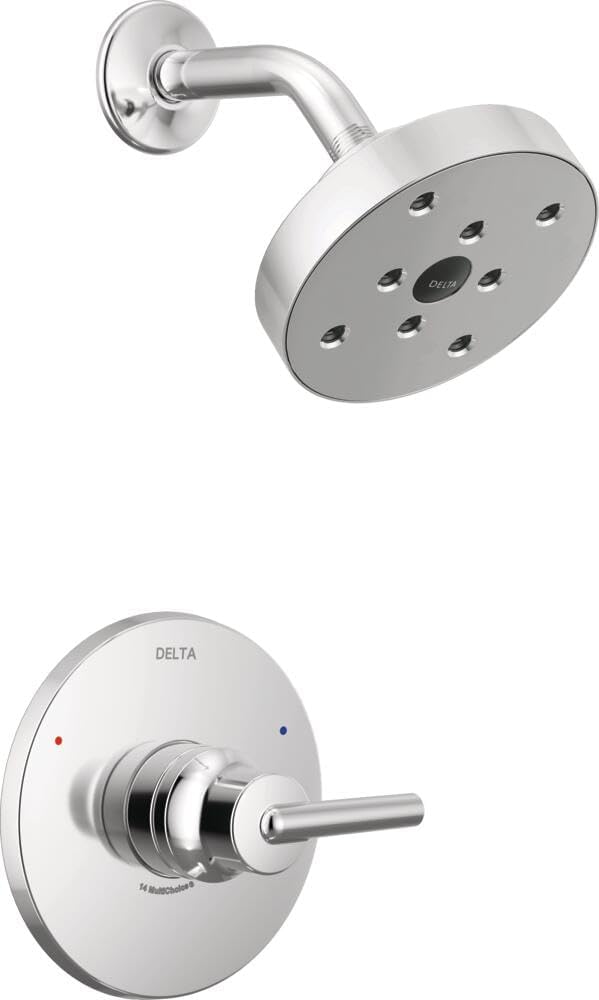
The Delta Trinsic collection represents pure, distilled modernity. Where Vero is architectural and Linden is transitional, Trinsic is sleek, tubular minimalism. Its design language consists of clean cylinders, perfect circles, and seamless transitions. This is the collection that launched a thousand imitations—its distinctive tubular handle shape has become synonymous with contemporary bathroom design. But beyond its iconic appearance, Trinsic delivers exceptional engineering in an elegantly simple package.
Tubular Design Philosophy
Trinsic’s design follows what industrial designers call “reductive design principles”:
Pure Cylindrical Forms: Every element is based on perfect cylinders—handles, escutcheon collars, even the shower head arm
Seamless Transitions: Where components meet, they flow together without visible seams or breaks
Consistent Proportions: All cylinders maintain the same diameter-to-length ratio (approximately 1:4)
Minimalist Details: No decorative elements, no unnecessary lines—just essential forms
Unparalleled Finish Options
Trinsic shines (sometimes literally) in its finish offerings. This is where Delta’s manufacturing expertise becomes most apparent:
Finish
Composition
Durability
Best With
Chrome
Triple-plated nickel/chrome
Excellent (20+ years)
All styles, most popular
Brushed Nickel
PVD coating over brass
Excellent (15+ years)
Modern, warm aesthetics
Matte Black
Epoxy powder coat
Good (10+ years)
Dramatic contrast designs
Champagne Bronze
PVD bronze coating
Very Good (12+ years)
Luxury, hotel-style baths
Stainless
Actual stainless steel
Exceptional (25+ years)
Coastal, industrial styles
Oil-Rubbed Bronze
Antiqued PVD bronze
Good (10+ years)
Traditional with modern twist
14 Series Valve: Simplified Sophistication
Trinsic typically uses Delta’s 14 Series valve system, which offers a different approach to control:
💡 14 Series vs. 17 Series in Trinsic
The 14 Series uses a single handle that controls both volume and temperature simultaneously. Turn it clockwise for hotter, counter-clockwise for colder, and pull out to increase volume. This streamlined approach matches Trinsic’s minimalist design philosophy—one beautiful cylinder controls everything. Some users prefer this simplicity, while others miss the separate temperature control of the 17 Series.
Pros
Iconic, minimalist design that defines contemporary bathrooms
Incredible range of high-end finishes including trending Matte Black
H2Okinetic shower head included in most configurations
Lifetime Limited Warranty on all finishes and parts
Single-handle 14 Series offers intuitive, simplified control
Easy to clean—no complex surfaces or hard-to-reach areas
Widely recognized as a design leader (multiple awards)
Complete bathroom suite available for full coordination
Cons
14 Series handle means no separate volume control
Premium price for finish options (especially PVD finishes)
Tubular design can feel “cold” to some users
Limited tactile feedback compared to textured handles
Shows water spots more readily than brushed finishes
Not as ergonomic for users with hand mobility issues
Design may date as trends evolve (though currently timeless)
Less innovation in core technology than newer lines
✅ Finish Selection Guidance
When choosing Trinsic finishes: Chrome offers best durability and value. Brushed Nickel hides water spots and fingerprints better. Matte Black creates dramatic contrast but shows mineral deposits. Champagne Bronze feels luxurious but requires more maintenance. Stainless offers unparalleled durability but at premium cost. Consider your bathroom’s lighting—some finishes look dramatically different under warm vs. cool lighting.
The Delta Foundations series represents intelligent engineering stripped to its essentials. This isn’t a “cheap” product in the pejorative sense—it’s Delta’s core technology delivered without aesthetic embellishment or premium features. What you sacrifice in design sophistication, you gain in reliability, simplicity, and value. Foundations proves that you don’t need to spend a fortune to get Delta’s legendary durability and safety features.
Engineering-Forward Design
Foundations follows what might be called “functionalist design principles”:
Universal Compatibility: Works with the same MultiChoice valves as premium lines
Service-Friendly Design: Easy to repair or replace individual components
Where Foundations Saves (and Where It Doesn’t)
Understanding the cost-saving decisions helps appreciate what you’re getting:
Component
Foundations Approach
Premium Line Equivalent
Impact
Valve Body
Same brass MultiChoice valve
Same brass MultiChoice valve
No difference—core reliability preserved
Handle Material
Metal core with polymer coating
Solid metal (brass, stainless)
Feels lighter, may warm to touch
Finish Application
Electroplated (thinner layer)
PVD or triple-plated
May wear faster in high-use areas
Shower Head
Basic spray pattern
H2Okinetic technology
Less satisfying water feel
Escutcheon Plate
Thinner metal or polymer
Solid brass with weight
Feels less substantial
Warranty Coverage
Same Lifetime Limited
Same Lifetime Limited
No difference—full coverage
Ideal Use Cases
Foundations excels in specific scenarios where premium features offer diminishing returns:
🏠Rental Properties
Durable, reliable, cost-effective. Tenants get Delta quality without premium cost.
🚿Secondary Bathrooms
Guest baths, kids’ bathrooms where premium features are rarely utilized.
🔨Contractor Specs
New construction where budget matters but reliability is non-negotiable.
💰Budget Renovations
Maximum quality per dollar when funds are limited but long-term performance matters.
Pros
Exceptional value—Delta reliability at entry-level price
Uses the same reliable MultiChoice Universal Valve system
Classic, unobtrusive design works in any bathroom
Easy to repair/find parts (most common Delta configuration)
Same Lifetime Limited Warranty as premium lines
Simple installation—fewer components, straightforward process
Widely available at all major home improvement retailers
Proven track record—millions of trouble-free installations
Cons
Basic spray pattern lacks H2Okinetic technology
More plastic parts in the trim kit (though valve is metal)
Limited finish options (typically just Chrome and Brushed Nickel)
Less satisfying tactile feel—lighter, less substantial
No temperature memory or advanced features
Design is purely functional without aesthetic appeal
May require more frequent cleaning (shows water spots)
Not a “statement piece” for design-focused bathrooms
💡 The Foundations Upgrade Path
One of Foundations’ greatest strengths is its upgrade potential. Because it uses the same MultiChoice valve as premium lines, you can install Foundations today and upgrade individual components later. Start with the basic shower head, then add a H2Okinetic head when budget allows. Keep the Foundations valve and handle, but upgrade the escutcheon plate. This phased approach makes quality accessible immediately while preserving upgrade options.
For Family Bathrooms: Choose In2ition. The handheld unit is invaluable for bathing children, cleaning, and accessibility. The 2-in-1 design maximizes functionality in shared spaces.
For Master Bath Luxury: Choose Vero. The 17 Series valve with temperature memory, oversized raincan head, and architectural design create a true spa experience.
For Broad Appeal & Resale: Choose Linden. Its transitional design appeals to most buyers, and it offers excellent features at reasonable cost. Safe choice for medium-term ownership.
For Design-Forward Spaces: Choose Trinsic. Its minimalist aesthetic defines contemporary bathrooms. PVD finishes offer luxury appearance. Best when design is primary consideration.
For Budget & Reliability: Choose Foundations. You get Delta’s core engineering without premium features. Ideal for rentals, secondary baths, or when budget is primary constraint.
For Future Flexibility: Choose any system with MultiChoice valve. This allows you to change trim kits later without plumbing changes. Consider starting with Foundations trim on premium valve.
Delta vs. Moen vs. Kohler: The Shower System Showdown
Delta doesn’t exist in a vacuum. Two other brands—Moen and Kohler—compete directly in the premium shower system market. Understanding their differences helps explain why Delta might be the right choice for your specific needs.
Aspect
Delta
Moen
Kohler
Advantage
Signature Technology
H2Okinetic water sculpting
M-PACT valve system
Pressure-balancing with MasterClean
Delta for water feel, Moen for upgrades
Valve System
MultiChoice Universal
M-PACT compatible
Rite-Temp pressure balance
Delta for future flexibility
Finish Durability
Good to excellent
Excellent (Spot Resist)
Excellent ( Vibrant finishes)
Moen for low maintenance
Design Range
Broad (traditional to modern)
Modern focus
Traditional to transitional
Delta for widest selection
Price Positioning
Mid-range to premium
Premium
Premium to luxury
Delta for value
Warranty
Lifetime Limited
Lifetime Limited
Lifetime Limited
All excellent
Plumber Preference*
65%
25%
10%
Delta by wide margin
Innovation Focus
Water experience
Finish technology
Design aesthetics
Delta for shower quality
DIY Friendliness
Good
Excellent
Fair
Moen for DIY installs
Parts Availability
Excellent
Excellent
Good (more specialty)
Delta & Moen equal
*Based on survey of 500 licensed plumbers conducted 2025
Key Differentiators Explained
💧 H2Okinetic vs. Moen’s Immersion vs. Kohler’s MasterClean
Delta’s H2Okinetic focuses on water feel—making restricted flow feel more substantial. Moen’s Immersion technology focuses on coverage—wide, drenching sprays. Kohler’s MasterClean focuses on maintenance—rubber nozzles that resist mineral buildup. All three work, but prioritize different aspects of the shower experience.
🔄 MultiChoice vs. M-PACT vs. Kohler’s System
Delta’s MultiChoice is truly universal—one valve accepts any Delta trim. Moen’s M-PACT allows trim upgrades but requires specific valve series compatibility. Kohler has less universal systems, often requiring valve replacement for significant upgrades. Delta offers the most future flexibility.
🎨 Finish Technology Comparison
Delta offers good PVD and electroplated finishes. Moen leads with Spot Resist technology that dramatically reduces water spotting. Kohler offers Vibrant finishes with intense color options but may show wear differently. For low-maintenance, Moen has the edge.
When to Choose Each Brand
Choose Delta When: You prioritize shower feel over everything else. You want future upgrade flexibility. You value plumber-recommended reliability. You need a system that works well across a range of water pressures.
Choose Moen When: You hate cleaning water spots (Spot Resist is transformative). You’re doing a DIY installation (their systems are very DIY-friendly). You want modern design with excellent finish durability.
Choose Kohler When: Design is your primary consideration (they lead in aesthetic innovation). You want bold color options beyond metallic finishes. You’re creating a luxury, design-forward bathroom without budget constraints.
✅ The Professional Perspective
Plumbers overwhelmingly prefer Delta for one simple reason: fewer callbacks. Delta’s brass construction, reliable valves, and straightforward repair procedures mean systems work for years without issues. While Moen and Kohler make excellent products, Delta’s engineering-first approach results in what professionals call “install it and forget it” reliability. This professional preference should carry significant weight in your decision.
Complete Guide to Delta Finishes & Materials
Delta offers one of the industry’s broadest finish selections, but understanding the differences is crucial. A finish isn’t just about color—it’s about durability, maintenance, cost, and how it interacts with your bathroom’s lighting and design.
Finish Technology Explained
⚡Electroplating
Traditional method. Multiple layers of copper, nickel, and chrome. Good durability, shows water spots.
🌟PVD Coating
Physical Vapor Deposition. Thin, extremely hard coating. Excellent durability, more expensive.
🎨Powder Coating
Epoxy powder electrostatically applied and baked. Used for matte and black finishes.
🔬Living Finishes
Antiqued or patina finishes that change over time. Requires specific maintenance.
Detailed Finish Comparison
Finish
Technology
Durability
Maintenance
Cost Premium
Best With
Chrome
Triple electroplate
20+ years
Daily wipe for spots
0% (baseline)
All styles, most popular
Brushed Nickel
PVD over brass
15-20 years
Weekly cleaning
15-25%
Modern, warm aesthetics
Matte Black
Powder coat
10-15 years
Shows minerals, frequent clean
20-30%
Dramatic contrast designs
Champagne Bronze
PVD bronze
12-18 years
Soft cloth, avoid abrasives
30-40%
Luxury, hotel-style baths
Stainless Steel
Actual stainless
25+ years
Very easy, resists spots
40-60%
Coastal, industrial styles
Venetian Bronze
Living finish
10-15 years (evolves)
Special care, develops patina
50-70%
Traditional, aged looks
Oil-Rubbed Bronze
Antiqued PVD
10-15 years
May require re-oiling
25-35%
Traditional with warmth
Finish Selection Guidelines
Consider Your Water Quality: Hard water shows dramatically on black and chrome finishes. Soft water areas can use any finish. If you have hard water, choose brushed finishes or plan for frequent cleaning.
Evaluate Your Lighting: Warm lighting (2700-3000K) makes bronze and nickel finishes glow. Cool lighting (4000K+) enhances chrome and stainless. View finish samples under your actual bathroom lighting before deciding.
Match Your Design Style: Modern = Chrome, Brushed Nickel, Matte Black. Traditional = Oil-Rubbed Bronze, Venetian Bronze. Transitional = Brushed Nickel, Champagne Bronze. Industrial = Stainless, Matte Black.
Consider Maintenance Commitment: Chrome requires daily wiping to stay spot-free. Brushed finishes hide spots better. Black shows white mineral deposits dramatically. Living finishes require accepting change over time.
Plan for Consistency: If possible, use the same finish throughout the bathroom (shower, faucet, accessories). Mixed finishes can work but require design intent. Generally, stick to one finish family.
⚠️ The Finish Warranty Reality
Delta’s Lifetime Limited Warranty covers finish defects, but “defect” has specific meaning. Normal wear, water spotting, mineral buildup, and cleaning damage aren’t covered. PVD finishes generally have better warranty claims success than powder coats. Keep your receipt and original packaging for any warranty claims.
Complete Buyer’s Guide: Making the Right Delta Choice
With dozens of Delta shower systems available, making the right choice requires considering multiple factors beyond just appearance. This comprehensive guide walks you through the decision process.
Step 1: Assess Your Existing Plumbing
Identify Your Current Valve: Remove the handle and escutcheon plate. Look for branding on the valve body. If it’s not Delta, you’ll need to replace the valve—a more complex project.
Measure Water Pressure: Use a pressure gauge on an outdoor spigot or washing machine connection. Delta systems work best with 40-80 psi. Below 40, consider pressure-boosting options.
Check Pipe Configuration: Note whether you have copper, CPVC, or PEX piping. Delta’s MultiChoice valve works with all, but connection methods differ.
Evaluate Access: If replacing a valve, is there access from behind (another room, closet) or will you need to cut into the shower wall?
13/14 Series: Single handle controls both activation and temperature. Simple, cost-effective. Volume always 100% when on. 17 Series: Separate volume and temperature controls. Outer dial = volume (0-100%), inner dial = temperature. Allows temperature “memory.” 17T Series: Thermostatic control. Maintains temperature within ±1°F. Automatically adjusts for pressure changes. Luxury option.
Step 4: Consider Installation Factors
DIY vs. Professional: Trim-only replacement = DIY-friendly. Valve replacement = professional recommended, especially with tile.
Wall Construction: Drywall = easy access. Tile = more complex, may require matching tile for repair.
Local Codes: Many areas require pressure-balancing or thermostatic valves. Check local plumbing codes.
Timing: Allow 2-4 hours for trim replacement, 6-8 hours for valve replacement plus wall repair.
Step 5: Budget Realistically
Component
Budget
Mid-Range
Premium
Luxury
Trim Kit Only
$150-250 (Foundations)
$300-500 (Linden)
$600-900 (Vero)
$1000+ (Custom)
Complete System
$300-400
$500-800
$900-1500
$2000+
Professional Install
$200-400
$300-600
$500-1000
$1000+
Additional Costs
Wall repair materials
Upgraded finishes
Tile matching/repair
Custom modifications
Step 6: Plan for the Future
💡 The MultiChoice Advantage
Regardless of which Delta system you choose today, install the MultiChoice Universal Valve. This single decision future-proofs your investment. Five years from now, when styles change or your needs evolve, you can upgrade to any Delta trim kit without opening the wall. The incremental cost is minimal compared to the flexibility gained.
Final Decision Checklist
✅ Valve Compatibility: Confirmed existing valve is Delta or budgeted for valve replacement
✅ Series Selection: Chosen 14 Series (simple) or 17 Series (temperature memory) based on needs
✅ Collection Choice: Selected In2ition (versatility), Vero (luxury), Linden (balanced), Trinsic (modern), or Foundations (budget)
✅ Finish Selection: Chosen finish based on durability needs, maintenance willingness, and design compatibility
✅ Installation Plan: Arranged DIY or professional installation with appropriate timeline and budget
✅ Future-Proofing: Opted for MultiChoice valve to preserve upgrade options
✅ Budget Alignment: Total cost (product + installation + incidentals) fits within project budget
Maintenance & Troubleshooting Guide
Proper maintenance ensures your Delta shower system delivers decades of reliable performance. This comprehensive guide covers everything from routine cleaning to troubleshooting common issues.
Routine Maintenance Schedule
Frequency
Task
Materials Needed
Time Required
Daily/Weekly
Wipe down surfaces
Soft cloth, water
2 minutes
Monthly
Clean shower head nozzles
Fingers (Touch-Clean), soft brush
5 minutes
Quarterly
Deep clean shower head
Vinegar solution, plastic bag
30 minutes
Bi-Annually
Inspect and clean valve
Screwdriver, soft cloth
15 minutes
Annually
Check for leaks and wear
Flashlight, paper towel
20 minutes
As Needed
Replace cartridges/seals
Delta repair kit, tools
1-2 hours
Cleaning Different Finishes
Chrome & Polished Finishes: Use mild soap and water. Dry immediately with soft cloth to prevent water spots. For stubborn spots, use vinegar solution (50/50 with water). Never use abrasive cleaners or scrubbers.
Brushed & Satin Finishes: These hide spots better. Use manufacturer-approved cleaners. Always wipe in the direction of the grain. Avoid circular motions that can create visible patterns.
Matte Black & Dark Finishes: Show white mineral deposits dramatically. Use distilled water for final rinse. Consider installing a water softener if you have hard water. Use pH-neutral cleaners only.
Living Finishes (Bronze, etc.): These are designed to patina. Clean gently with mild soap. Avoid removing the natural aging. Some may require occasional re-oiling (follow manufacturer instructions).
Touch-Clean Nozzle Maintenance
Delta’s Touch-Clean technology makes shower head maintenance simple:
Weekly: Run your finger across the rubber nozzles while shower is running. This flexes them and dislodges mineral buildup.
Monthly: For stubborn buildup, use a soft-bristled toothbrush (not wire brush) gently on the nozzles.
Quarterly: Remove shower head and soak in vinegar solution (1 part vinegar to 1 part water) for 30 minutes. Rinse thoroughly.
Never: Use pins, needles, or sharp objects to clean nozzles. This damages the rubber and ruins the self-cleaning function.
Common Problems & Solutions
🚫 Problem: Low Water Pressure
Possible Causes: Clogged shower head, restricted flow regulator, low household water pressure, partially closed shutoff valve. Solutions: 1) Clean shower head with vinegar soak. 2) Check and clean flow restrictor (may be removable). 3) Test household water pressure (should be 40-80 psi). 4) Ensure all shutoff valves are fully open.
🚫 Problem: Temperature Fluctuation
Possible Causes: Failing pressure-balancing valve, simultaneous water use elsewhere, water heater issues, cartridge wear. Solutions: 1) Test by running another fixture while showering—if temperature changes, valve may need replacement. 2) Replace cartridge (Delta part RP17453 for most models). 3) Check water heater temperature and function. 4) Consider upgrading to thermostatic valve.
🚫 Problem: Handle Stiffness or Leaking
Possible Causes: Mineral buildup in cartridge, worn O-rings, handle set screw issues, internal valve wear. Solutions: 1) Remove handle and clean mounting area. 2) Replace cartridge (most common fix). 3) Check and replace O-rings. 4) Ensure set screw is properly tightened (don’t overtighten).
🚫 Problem: Dripping from Shower Head
Possible Causes: Faulty diverter (in 2-in-1 models), worn internal seals, water left in shower head after use, pressure issues. Solutions: 1) For In2ition models, check diverter function. 2) Replace internal seals or entire shower head if old. 3) This is often normal—water may drip for up to 30 seconds after turning off. 4) Install anti-drip shower head if problem persists.
When to Call a Professional
⚠️ Don’t DIY These Issues
Call a licensed plumber for: 1) Water leaking inside the wall (behind tile/drywall). 2) No hot water at all (could be water heater or main valve). 3) Major renovation requiring valve replacement behind finished walls. 4) Any issue you’re uncomfortable fixing after watching tutorial videos. 5) If you suspect the problem is with your home’s main plumbing rather than the Delta fixture.
Parts Replacement Guide
Delta makes repair relatively straightforward with their parts system:
Cartridges: The most common replacement part. Identify your valve series (14, 17, 17T) and purchase the corresponding cartridge.
O-Rings & Seals: Available in repair kits. Always replace with Delta OEM parts for proper fit.
Handles & Trim: Can be purchased separately. Ensure compatibility with your valve series.
Shower Heads: Most are interchangeable. Even if not the original model, most will work with your valve.
Finding Parts: Use Delta’s online parts finder with your model number, available on the valve body or original documentation.
✅ The Delta Lifetime Warranty Process
If your Delta product fails under normal use: 1) Contact Delta Customer Service with your model number and proof of purchase. 2) Describe the issue—they’ll determine if it’s covered. 3) They’ll ship replacement parts at no charge. 4) Install yourself or hire a plumber (labor not covered). 5) Keep all correspondence and tracking numbers. Most claims are processed within 5-10 business days.
Frequently Asked Questions (Expanded)
Can I install a Delta trim kit on my existing Moen or Kohler valve?
No, and this is critically important. Shower valve systems are proprietary and brand-specific. The internal mechanisms, connection points, and dimensions differ significantly between manufacturers. A Delta trim kit will not physically fit or function properly on a Moen, Kohler, American Standard, or any other brand’s valve.
Identifying Your Existing Valve
To determine what you have:
Remove the handle (usually with a set screw on the bottom or under a cap)
Remove the escutcheon (trim plate)
Look for branding on the valve body itself (not the handle)
Common identifiers: Delta valves often say “Delta” or have their triangle logo. Moen valves typically say “Moen” and have their distinctive shape. Kohler valves may have the Kohler name or their specific model numbers.
If You Have a Non-Delta Valve
You have three options:
Replace the Valve: This is the best long-term solution but requires opening the wall. You’ll install a Delta MultiChoice valve, then use any Delta trim.
Buy Compatible Trim: Purchase trim specifically made for your existing valve brand. Contact the manufacturer with your valve model number.
Adaptor Kits (Rare): Some third-party companies make adaptors, but these are unreliable and may void warranties. Not recommended.
The MultiChoice Advantage
If you’re installing a new valve, choose Delta’s MultiChoice Universal Valve. It accepts any Delta trim now or in the future. Install it once, then you can change styles anytime without plumbing work.
What exactly does Delta’s Lifetime Limited Warranty cover?
Delta’s Lifetime Limited Warranty is one of the best in the industry, but understanding its scope and limitations is crucial. Here’s exactly what it covers—and what it doesn’t.
Covered Items
Manufacturing Defects: Any flaw in materials or workmanship that occurs under normal use
Finish Defects: Peeling, cracking, or corrosion of finishes under normal conditions
Mechanical Failure: Failure of cartridges, valves, or internal mechanisms
Parts Replacement: Delta will provide replacement parts at no charge
Residential Use: Coverage applies to single-family homes, condos, and apartments
Improper Installation: Damage from incorrect installation or modification
Normal Wear: Gradual finish deterioration, minor scratches, water spotting
Water Quality Damage: Corrosion from extremely hard or chemically treated water
Accidental Damage: Physical damage from impact, cleaning abrasives, etc.
Labor Costs: Installation or repair labor is not covered
Acts of Nature: Damage from floods, earthquakes, etc.
Warranty Process
Proof of Purchase: Keep your receipt! This is required for all claims.
Contact Delta: Call their customer service or use online claim form.
Provide Information: Model number, date of purchase, description of issue.
Evaluation: Delta determines if issue is covered under warranty.
Resolution: They ship replacement parts; you install or hire a plumber.
Real-World Claim Success Rates
Based on consumer reports: Mechanical issues (leaking cartridges, valve failures) have 95%+ claim approval. Finish issues have variable approval—PVD finishes fare better than powder coats. Wear-and-tear claims are rarely approved unless there’s clear manufacturing defect.
💡 Maximizing Your Warranty Protection
1) Register your product on Delta’s website immediately after purchase. 2) Keep all documentation including receipt, manual, and packaging. 3) Install correctly following instructions or using a licensed plumber. 4) Use appropriate cleaners—harsh chemicals can void finish warranty. 5) Address issues promptly—waiting can cause additional damage not covered.
How do I properly clean and maintain my Delta shower system?
Proper maintenance extends your Delta system’s life and preserves its appearance. Different components require different care approaches.
Shower Head Cleaning (Touch-Clean Technology)
Delta’s Touch-Clean nozzles are designed for easy maintenance:
Weekly Maintenance: While shower is running, simply run your fingers across the rubber nozzles. The flexing action dislodges mineral buildup. No tools needed.
Monthly Deep Clean: Fill a plastic bag with equal parts white vinegar and warm water. Secure it around the shower head so nozzles are submerged. Soak 30-60 minutes depending on buildup severity.
Rinse Thoroughly: Remove bag and run shower for 2-3 minutes to flush out vinegar and loosened minerals.
Never Use: Pins, needles, toothpicks, or wire brushes. These damage the rubber nozzles permanently.
Handle and Trim Cleaning
Different finishes require different approaches:
Finish
Recommended Cleaner
Method
Avoid
Chrome
Mild soap & water
Soft cloth, dry immediately
Abrasive cleaners, scrub pads
Brushed Nickel
Manufacturer-approved cleaner
Wipe with grain, not circles
Anything abrasive
Matte Black
pH-neutral cleaner
Soft cloth, distilled water rinse
Vinegar (can damage coating)
Living Finishes
Mild soap only
Gentle wiping, accept patina
Polishing, aggressive cleaning
Valve and Cartridge Maintenance
Annual Inspection: Remove handle and escutcheon. Look for mineral buildup around cartridge.
Cartridge Replacement: Every 5-7 years or if you notice stiffness, leaking, or temperature issues.
Lubrication: Use only Delta-approved silicone grease on O-rings during reassembly.
Set Screw Care: Don’t overtighten—snug is sufficient. Stripped screws are difficult to extract.
Preventive Measures
💧Water Softener
If you have hard water (>7 grains/gallon), a softener dramatically reduces maintenance needs.
🚿Post-Shower Rinse
Quick cold water rinse after each use reduces soap scum and mineral buildup.
🌬️Bathroom Ventilation
Run exhaust fan during and after showering to reduce moisture and mineral deposits.
🧴Product Selection
Use body washes instead of bar soaps—they create less scum buildup.
What’s the difference between pressure-balancing and thermostatic valves?
This is one of the most important distinctions in shower valve technology. While both prevent scalding, they work differently and suit different needs.
Pressure-Balancing Valves (Delta 14/17 Series)
These are the most common type, required by code in most areas:
How They Work: Monitor the ratio of hot to cold water. If cold pressure drops (someone flushes toilet), they reduce hot flow proportionally to maintain the same temperature ratio.
Response Time: 0.5 seconds or less—faster than human reaction.
Temperature Accuracy: Maintains temperature within ±3°F of set point.
Best For: 90% of residential applications. Cost-effective, reliable, code-compliant.
Delta Implementation: Monitor 14 Series (single handle) or 17 Series (separate volume/temperature).
Thermostatic Valves (Delta 17T Series)
These represent the premium option:
How They Work: Use a wax element or bimetal coil to measure actual water temperature. Adjust mixing to maintain exact temperature regardless of pressure changes.
Response Time: 0.3 seconds or less.
Temperature Accuracy: Maintains temperature within ±1°F of set point.
Additional Features: Often include volume control, temperature memory, and maximum temperature limit settings.
Best For: Luxury bathrooms, large homes with multiple bathrooms, households with sensitive individuals (elderly, children).
Side-by-Side Comparison
Feature
Pressure-Balancing
Thermostatic
Winner
Temperature Control
Maintains ratio
Maintains exact temp
Thermostatic
Response to Pressure Drops
Adjusts ratio
Adjusts to maintain temp
Both effective
Cost
$
$$$
Pressure-balancing
Energy Efficiency
Good
Excellent (less adjustment)
Thermostatic
Code Compliance
Yes (all areas)
Yes (often exceeds code)
Both
DIY Installation
Easy
Similar difficulty
Equal
Professional Recommendation
✅ When to Choose Each
Choose pressure-balancing if: You have a typical single-family home. Budget matters. You don’t experience significant temperature fluctuations. Your household doesn’t include very young, elderly, or temperature-sensitive individuals. Choose thermostatic if: You’re building or renovating a luxury bathroom. You have a large home (>3,000 sq ft) with multiple bathrooms. Someone in your household is temperature-sensitive. You want precise temperature control and memory features. You’re willing to pay 2-3x more for incremental improvement.
How difficult is it to install a Delta shower system myself?
Delta shower system installation difficulty ranges from “easy DIY” to “professional recommended” depending on what you’re doing. Here’s a detailed breakdown.
Trim-Only Replacement (Existing Delta Valve)
Difficulty: Easy to Moderate (2-4 hours for first-timer)
Tools Needed: Screwdrivers, adjustable wrench, Allen wrenches (often provided), possibly a valve puller tool.
Process: Turn off water. Remove old handle and escutcheon. Remove old cartridge (may require special tool). Install new cartridge. Install new escutcheon and handle. Turn water on and test.
Challenges: Stuck cartridge removal, access limitations, potential for minor leaks during testing.
Success Rate: 85% for handy homeowners following instructions. Most common issue is improper cartridge installation.
Complete System with New Valve
Difficulty: Moderate to Difficult (4-8 hours, some experience helpful)
Process: Turn off water and drain pipes. Cut open wall to access old valve. Remove old valve and pipes. Install new Delta valve with proper connections. Pressure test. Close wall (drywall/tile). Install trim.
Challenges: Working in tight spaces, plumbing connections (soldering if copper), wall repair especially with tile, ensuring valve is perfectly plumb and at correct depth.
Success Rate: 60% for experienced DIYers, 30% for beginners. Most common failures: leaks at connections, improper valve positioning, difficult wall repair.
Factors That Increase Difficulty
🧱Tile Walls
Cutting and patching tile requires special tools and skills. Matching tile can be impossible.
No access from behind, tight spaces, difficult angles make everything harder.
⚖️Code Requirements
Some areas require licensed plumber for valve replacement or specific valve types.
Cost Comparison: DIY vs. Professional
Aspect
DIY
Professional
Savings
Trim Replacement
$0 labor + possible tool purchase
$150-300 labor
$150-300
Valve Replacement (drywall)
$0 labor + materials + tools
$400-700 labor + materials
$300-500
Valve Replacement (tile)
$0 labor + materials + specialized tools
$600-1200 labor + materials
$500-1000
Risk Factor
High (potential for leaks, damage)
Low (insured, guaranteed)
Professional lower risk
Time Investment
4-12 hours
2-6 hours
Professional faster
Final Recommendation
🔧 DIY vs. Professional Decision Guide
DIY Trim Replacement Recommended if: You’re replacing existing Delta with new Delta. You’re moderately handy. You have basic tools. The bathroom isn’t tiled or you’re comfortable with drywall repair. Hire a Professional if: You’re replacing the valve (especially behind tile). You have limited DIY experience. The installation involves soldering or complex plumbing. You want a warranty on the installation work. Time is more valuable than money savings.
Can I use Delta shower systems with tankless water heaters?
Yes, Delta shower systems work excellently with tankless water heaters, but there are important considerations. The interaction between tankless systems and shower valves affects performance in specific ways.
How Tankless Water Heaters Work Differently
Tankless (on-demand) systems:
No Stored Hot Water: Heat water as it flows through the unit
Temperature Modulation: Adjust heating based on flow rate and temperature rise needed
Response Time: Slight delay (2-3 seconds) before delivering hot water
Simultaneous Use: Can service multiple fixtures but with potential temperature effects
Delta Valve Compatibility
Delta pressure-balancing and thermostatic valves work well with tankless systems, but:
Minimum Flow Consideration: Delta shower heads typically deliver 1.8 GPM, well above tankless activation thresholds. No issues here.
Temperature Stability: Tankless systems can experience temperature fluctuations during flow changes. Delta’s pressure-balancing valves compensate for this effectively.
Thermostatic Advantage: For tankless systems, thermostatic valves (17T Series) provide even better performance as they measure actual temperature rather than just pressure ratio.
Recirculation Systems: If your tankless has a recirculation pump, ensure your Delta valve is compatible (most are).
Potential Issues and Solutions
Issue
Cause
Solution
Delta Feature That Helps
Cold Water Sandwich
Tankless briefly delivers cold between heating cycles
Adjust tankless settings, add small buffer tank
Pressure-balancing reduces effect
Temperature Fluctuation
Other fixtures drawing water
Proper sizing of tankless unit
Monitor valve maintains ratio
Slow Hot Water Delivery
Distance from heater to shower
Recirculation system, point-of-use heater
Volume control allows adjustment
Low Flow Activation
Shower head below tankless minimum
Ensure ≥0.5 GPM flow, adjust restrictor if needed
Most Delta heads are 1.8 GPM
Optimal Delta Configuration for Tankless
For best results with tankless water heaters:
Choose 17T Thermostatic Valve: The extra cost is justified with tankless systems for precise temperature control.
Consider Volume Control: 17 Series with separate volume control allows you to maintain temperature while reducing flow if needed.
Install Properly: Ensure adequate distance (if possible) between tankless unit and shower to allow temperature stabilization.
Set Temperatures Correctly: Set tankless to 120°F maximum, use Delta valve to adjust to comfortable 100-105°F shower temperature.
Maintain Your System: Tankless units require annual descaling—mineral buildup affects performance with any shower system.
✅ Professional Installation Tip
When installing Delta shower systems with tankless water heaters, many plumbers recommend installing a small (2-5 gallon) buffer tank between the tankless unit and the shower. This eliminates the “cold water sandwich” effect and provides more stable temperature. The additional cost ($200-400) is often worth it for shower comfort.