Does a Tub to Shower Conversion Increase Home Value?
🏠
It Depends — But Usually Yes, With One Critical Condition
A tub to shower conversion typically increases home value by 60–70% ROI when done correctly. However, removing the only bathtub in a home can reduce buyer interest and hurt resale value. Keep at least one tub in the house, and a well-executed conversion becomes a strong selling point.
This is one of the most common home improvement questions homeowners ask before a bathroom remodel — and the answer is more nuanced than a simple yes or no. The value impact of converting a tub to a shower depends on four factors working together: whether another tub remains in the home, the quality and design of the conversion, the specific real estate market you’re in, and the price point of your home relative to its neighborhood.
Get all four right, and a tub-to-shower conversion in a master bath or secondary bathroom can be one of your best return-on-investment projects. Get them wrong — particularly the “keep at least one tub” rule — and you may be spending $5,000–$15,000 to reduce your buyer pool and shrink your offers.
60–70%
Average ROI on tub-to-shower conversion (Angi, 2026)
$4K–$12K
Typical conversion cost range in 2026
80%
ROI on midrange full bath remodel (JLC Cost vs Value 2025)
38%
Of homeowners completed a bathroom project in 2025–26
ROI Data and Statistics: What the Numbers Say in 2026
The most reliable data on bathroom remodel ROI comes from the Journal of Light Construction’s annual Cost vs. Value Report, which analyzes real remodeling costs and resale value impacts across 119 US markets. The 2025 edition (the most recent with full data) shows a midrange bathroom remodel costs an average of $26,138 and yields $20,915 at resale — an 80% ROI. Tub-to-shower conversions specifically track at 60–70% ROI according to Angi’s analysis of completed projects.
To put that in dollar terms: a well-done shower conversion project costing between $5,000 and $10,000 could add several thousand dollars to your home value. A real-world example from 2025: a Denver homeowner who included a tub-to-shower conversion as part of a $28,000 midrange bathroom remodel saw their home appraise $30,800 higher — a 110% return across the full project scope.
| Project Type | Avg Cost (2025–26) | Avg Value Added | ROI | Source |
|---|
| Midrange bath remodel (full) | $26,138 | $20,915 | 80% | JLC Cost vs Value 2025 |
| Tub to shower conversion only | $4,000–$12,000 | $2,400–$8,400 | 60–70% | Angi 2026 |
| Upscale bathroom remodel | $78,000+ | ~$35,000 | 45% | JLC Cost vs Value 2025 |
| Bathroom addition (midrange) | $60,645 | $32,347 | 53% | JLC Cost vs Value 2025 |
| Upscale bathroom addition | $111,255 | $40,526 | 36% | JLC Cost vs Value 2025 |
The pattern in the data is consistent: midrange remodels outperform luxury upgrades in ROI. A $10,000 tub-to-shower conversion with quality mid-tier materials returns significantly more as a percentage than a $78,000 spa-style overhaul — even if the luxury remodel adds more total dollar value. This is a critical insight for homeowners who are primarily motivated by resale return rather than personal enjoyment.
📊 The “Daily Use Value” Factor
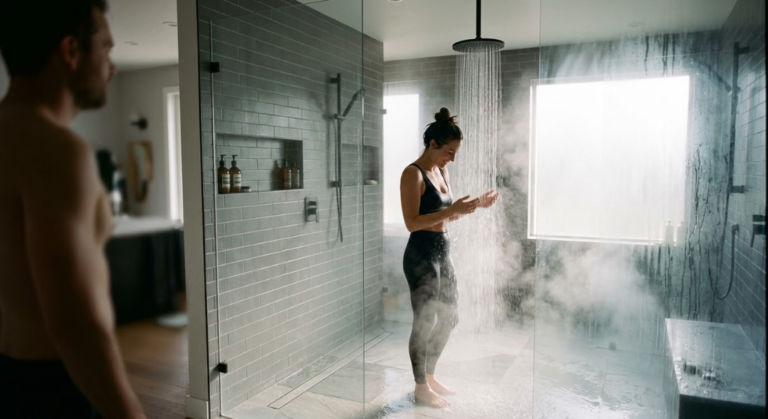
ROI calculations measure only financial return at resale. Many homeowners — including those who eventually sell — report that a tub-to-shower conversion dramatically improves their daily quality of life by replacing an unused bathtub with a more functional, accessible, and enjoyable shower experience. This “use value” is real and compounds over the years you remain in the home. A project with 65% financial ROI that you use and enjoy every single day for five years is often a better investment than its financial return suggests.
When a Tub to Shower Conversion Adds Value
Several specific circumstances make a tub-to-shower conversion a clear value-adding decision. Understanding when you’re in one of these favorable scenarios helps you move forward with confidence.
✅ The Home Has 2+ Bathrooms
The single most important favorable condition. If your home has at least two bathrooms and at least one retains a tub, converting a second bath’s tub to a shower is almost always a smart move. According to the National Association of Realtors, switching from a tub to a shower shouldn’t negatively impact resale value as long as you leave at least one tub in your home.
✅ The Tub Is Rarely or Never Used
Modern lifestyle data consistently shows that most homeowners use their primary bathroom tub rarely — many report never using it at all. Converting an unused bathtub into a functional, spacious walk-in shower makes the space genuinely better for daily use and signals to buyers that the home has been thoughtfully updated.
✅ The Bathroom Is Small
A 5×8 foot bathroom with a standard 60-inch tub leaves very little functional floor space. Converting to a walk-in shower can open up the bathroom dramatically — particularly a larger custom shower or a curbless design that visually expands the space. Buyers in small-bathroom markets respond strongly to bathrooms that feel larger and more functional.
✅ The Home Targets Adult or Older Buyers
In neighborhoods with older demographics, move-up buyers, or retirees, walk-in showers are actively preferred over tubs. While a walk-in shower looks luxurious and modern, removing the only bathtub in your house can hurt its value. Families with kids are more interested in homes with at least one bathtub. So think about who is looking to buy in your neighborhood. If your market skews older or adult-only households, a shower conversion is almost always a positive.
✅ The Tub/Bathroom Is Dated or Damaged
An old, stained, or worn bathtub in a bathroom with dated tile actively depresses your home’s value. In this scenario, a tub-to-shower conversion isn’t just about adding value — it’s about stopping the value leak. A cracked tub surround, old fiberglass that can’t be cleaned to look new, or a green/harvest gold color scheme are all strong arguments for replacement.
✅ The Conversion Is Done to Market-Appropriate Standards
Value is added when the conversion quality matches the home’s price point and neighborhood standard. A well-tiled walk-in shower with frameless glass doors in a $400K home is a value-adder. The same shower in a $150K home may be an over-improvement that won’t fully recoup. Match your materials and scope to what comparable homes in your area have.
When a Tub to Shower Conversion Can Hurt Home Value
❌ It Removes the Home’s ONLY Tub
This is the conversion scenario with consistent negative value impact. Families with young children require a bathtub — it’s a non-negotiable for a broad segment of buyers. Eliminating the only tub in the home immediately disqualifies it from consideration by this group, shrinking the buyer pool and weakening your negotiating position. Real estate agents across the country consistently cite “no bathtub at all” as a buyer objection that costs sellers meaningfully on price or days on market.
❌ Poor Installation Quality
A bad tub-to-shower conversion is worse than the dated bathtub it replaced. Water intrusion from inadequate waterproofing, uneven tile, a poorly fitting glass door, or visible caulk failures signal to buyers and inspectors that the work was done cheaply or improperly. This creates both a price negotiation point and a potential liability around mold and structural moisture damage. Always use a licensed contractor for the waterproofing stage.
⚠️ Over-Improvement for the Neighborhood
A $15,000 custom marble walk-in shower with a steam generator and body jets in a neighborhood where homes sell for $200,000 will not return its cost at sale. Buyers in that price range have maximum spend limits, and no matter how impressive the shower, the home’s ceiling value is set by comparables. Invest proportionally — mid-tier materials that match or slightly exceed your neighborhood standard, not luxury materials in a modest market.
⚠️ Trendy Design That Dates Quickly
Highly specific design choices — unusual tile colors, dramatic feature walls, statement hardware in seasonal colors — look impressive today but can look dated within 3–5 years. A shower installed in 2026 with today’s trendiest aesthetic may be neutral-to-negative by 2030 when you sell. Neutral, timeless materials (white subway tile, large-format light gray tile, brushed nickel or matte black hardware) have the best long-term buyer appeal.
The Critical One-Tub Rule: What Every Homeowner Must Know
⚠️
Industry Consensus: Never Remove Your Last Tub Before Selling
Every major real estate organization — NAR, NAHB, Angi, HomeLight — agrees: removing the only bathtub from a home negatively impacts resale appeal and can cost you on both price and time on market. Keep at least one full bathtub somewhere in the home.
This rule is consistent enough across markets, demographics, and price points that it functions as an absolute rather than a guideline. The underlying logic is simple: a buyer who doesn’t want a tub can always choose not to use it — but a buyer who needs a tub (and there are many) will walk away from a home that doesn’t have one. You are not making the home better for people who prefer showers. You are making it unusable for people who require tubs.
The demographics that specifically need tubs include: families with children under 10 (bathing young children in a shower is impractical and unsafe), pet owners who regularly bathe dogs, people with certain medical conditions requiring immersion soaks, and buyers who simply enjoy baths and will eliminate homes without them from their search criteria immediately.
🏡 The Practical Application
If your home has only one bathroom: do not convert the tub to a shower if you plan to sell within the next 5 years. If your home has two bathrooms: converting the tub in the primary/master bath to a shower is fine as long as the secondary bathroom retains its tub. If your home has three or more bathrooms: you have significant flexibility — keeping one tub total satisfies the market standard in most price ranges.
Who’s Buying Your Home? How Demographics Change the Calculation
The “right” bathroom configuration for resale value is not universal — it depends heavily on the likely buyer profile for your specific home in your specific neighborhood. A bathroom decision that maximizes value in a retirement community will be the opposite of the right decision in a family suburb.
| Likely Buyer Profile | Tub Preference | Shower Preference | Conversion Recommendation |
|---|
| Families with young children |
Strong — essential |
Secondary |
Keep tub in at least one bath; conversion only if second bath present |
| Empty nesters / couples |
Nice to have |
Strong preference for walk-in |
Conversion typically positive; keep one tub |
| Retirees / 55+ communities |
Often prefer no tub (accessibility) |
Strong — curbless preferred |
Conversion very positive; curbless design adds specific appeal |
| Urban singles / young professionals |
Rarely use tubs |
Strong preference |
Conversion strongly positive in urban markets |
| Luxury buyers ($700K+) |
Want option available |
Expect premium walk-in |
Both — freestanding tub AND large walk-in shower is the luxury standard |
| First-time buyers (starter homes) |
Often want tub for versatility |
Moderate preference |
Caution — keep tub unless second bath present |
💡 Talk to a Local Real Estate Agent Before Starting
Your real estate agent knows what’s selling in your specific neighborhood and at your price point. Before committing to a tub removal, a 30-minute conversation with a local agent about current buyer preferences in your market is the best $0 investment you can make. They can tell you whether homes with no tub are sitting longer, whether buyers are asking for it in inspection negotiations, and whether your specific street’s demographic history suggests families or adults. This local intelligence is more valuable than any national ROI average.
Tub to Shower Conversion Costs in 2026
On average, a tub to shower conversion in the U.S. costs between $4,000 and $12,000 as of 2026. The wide range reflects the enormous variation in material quality, shower size, plumbing complexity, and regional labor rates. Understanding what drives cost allows you to make informed decisions about where to spend and where to save.
Converting a tub to a shower ranges from $1,200 to $15,000, and your shower type sets totals near $3,000. Your conversion type drives costs, and custom tile, larger showers, and premium glass doors raise your total.
Full Cost Breakdown: Where Your Money Goes
| Cost Component | Typical Range | Budget Option | Premium Option |
|---|
| Tub removal & demo |
$300–$600 |
$300 (standard alcove) |
$600+ (cast iron, freestanding) |
| Plumbing (drain, supply) |
$400–$1,500 |
$400 (reuse existing drain location) |
$1,500+ (relocate drain or add fixtures) |
| Shower base / floor |
$200–$2,000 |
$200 (prefab acrylic base) |
$2,000+ (custom tile curbless floor) |
| Wall surround / tile |
$300–$4,000 |
$300 (acrylic panel kit) |
$4,000+ (full custom tile work) |
| Shower door / enclosure |
$300–$2,500 |
$300 (framed slider) |
$2,500+ (frameless glass) |
| Shower fixture / valve |
$200–$1,200 |
$200 (standard combo set) |
$1,200+ (rain head + handheld + body jets) |
| Waterproofing membrane |
$200–$500 |
$200 (painted membrane) |
$500 (Schluter KERDI system) |
| Labor (installer/contractor) |
$1,500–$5,000 |
$1,500 (prefab kit install) |
$5,000+ (custom tile, complex layout) |
| Permits |
$200–$2,000 |
$200 (small city) |
$2,000 (major metro) |
| Total: Budget Prefab |
$3,000–$5,000 — Acrylic base, panel walls, framed door, professional installation |
| Total: Mid-Range |
$6,000–$10,000 — Tile floor, acrylic or tile walls, semi-frameless door, quality fixtures |
| Total: Custom Luxury |
$10,000–$15,000+ — Full custom tile, frameless glass, curbless design, premium fixtures |
💡 Where to Spend vs Where to Save for Best ROI
Spend on: Waterproofing (never compromise this — water intrusion is the most expensive failure), the shower door (frameless glass makes the biggest visual impact per dollar), and the shower fixture (quality pressure and temperature performance is noticed daily). Save on: Large-format wall tile (mid-tier porcelain looks nearly identical to luxury stone at a fraction of the cost), custom niches (a standard recessed shelf is as functional as a custom tiled niche at half the price), and shower seat materials (teak or solid surface over custom tilework for the bench).
ROI by Conversion Type
| Conversion Type | Cost Range | Est. Value Added | ROI | Best For |
|---|
| Prefab shower kit (acrylic) |
$3,000–$5,000 |
$2,000–$3,500 |
60–70% |
Budget remodels, rental properties, starter homes |
| Mid-range tiled walk-in |
$6,000–$10,000 |
$4,500–$7,500 |
65–75% |
Main bathroom in mid-range homes — best ROI sweet spot |
| Curbless / accessible walk-in |
$7,000–$12,000 |
$5,000–$9,000 |
65–75% |
Aging-in-place buyers, open-design enthusiasts |
| Custom luxury (marble, steam) |
$12,000–$20,000+ |
$6,000–$10,000 |
40–55% |
High-end homes where buyers expect premium finishes |
Design Choices That Maximize Resale Value
The single biggest design decision that affects resale ROI is the choice between a wide range of materials and aesthetic approaches. The following recommendations are based on consistently appearing in both buyer survey data and real estate agent feedback about what converts browsers to buyers in bathroom showings.
🏆 Large-Format Light Tile (Best ROI Material)
12×24 or 24×24 inch light gray, warm white, or greige porcelain tile. Large format tiles have fewer grout lines — meaning less maintenance and a cleaner, more expensive look. Light colors expand the visual size of the shower. This format consistently appears in the “most broadly appealing” category in buyer surveys.
🏆 Frameless Glass Enclosure (Highest Visual Impact)
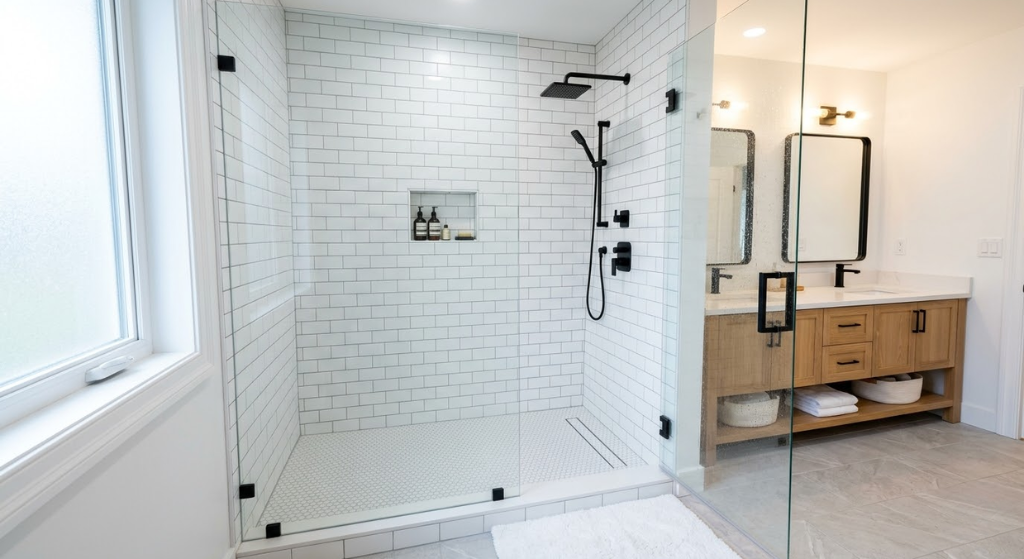
A frameless glass door or enclosure is the single upgrade that most dramatically elevates the perception of a shower’s quality. It creates a spa-like visual openness, makes the space feel larger, and signals quality in a way that no framed door can replicate. The price difference between semi-frameless and fully frameless is typically $300–$600 — one of the best-ROI individual upgrades available.
🏆 Neutral Hardware Finishes
Brushed nickel, matte black, and warm bronze are the three hardware finishes with the broadest buyer appeal in 2026. Chrome looks dated compared to brushed nickel. Trendy finishes like champagne bronze may narrow the buyer pool. Pick one finish and apply it consistently to the shower head, controls, towel bars, and other visible hardware.
✅ Built-In Niche or Shelf
A recessed tile niche or shower shelf is the functional feature buyers notice most. It signals thoughtful design and eliminates the unsightly shower caddy that’s present in most existing showers. A single 12×24 inch niche in the tiled surround adds minimal cost during construction and meaningful perceived value at showing.
✅ Curbless / Zero-Threshold Entry
A shower with a flush floor transition (no step over a threshold) is both aesthetically modern and practically accessible. It appeals to buyers across age groups — retirees appreciate the safety; younger buyers appreciate the open, spa-like aesthetic. The design requires more careful drainage planning but adds measurable appeal in both the luxury and accessibility markets.
✅ Rain Shower Head
A ceiling-mounted or extended-arm rain shower head is the fixture upgrade that buyers most respond to during showings. It signals luxury and daily indulgence at a cost of $100–$400 — a very high-impact, relatively low-cost add-on to any tub-to-shower conversion. Pair with a handheld shower for practical utility alongside the aesthetic appeal. See our best rainfall shower systems guide for reviewed options.
What to Avoid for Resale
- Highly specific tile patterns or colors: Geometric patterns, bold colors, or unique mosaic designs look impressive in current trends but narrow buyer appeal and date faster than neutral materials.
- Colored grout: Black or dark grout shows every soap scum streak; colored grout narrows the tile choices that look good with it. Warm gray grout with light tile is the most universally appealing combination.
- Glass block walls: These looked modern in 2000 and dated by 2010. Clear or frosted frameless glass is the current standard.
- Excessive hardware: Body jets, steam generators, and towel warming systems add cost with diminishing returns in most markets — their ROI is negative in all but luxury price points.
The Biggest Mistakes That Kill ROI on Tub-to-Shower Conversions
-
Removing the only bathtub in the home
This single mistake overrides everything else. No matter how beautiful the shower, a home with zero bathtubs loses a significant portion of its potential buyer pool, which directly translates to fewer offers, lower prices, and longer days on market.
-
Skipping or cutting corners on waterproofing
Waterproofing is the most critical technical element of any shower installation. A moisture intrusion failure — even one that starts small — leads to mold, structural damage, tile failure, and subfloor rot. These problems appear in home inspections and become seller-disclosed defects that cost far more to repair than the waterproofing would have cost to do correctly. Use a licensed contractor and a rated waterproofing system (RedGard, Schluter KERDI, or equivalent) for every shower installation.
-
Choosing trendy over timeless design
Today’s most-pinned shower aesthetic is tomorrow’s renovation project. White or light neutral tile, brushed metal hardware, and simple clean lines age far better than any current trend. Design for the buyer who will purchase your home in 5–7 years, not for next season’s design magazines.
-
Over-improving for the neighborhood
Every home has a ceiling value set by comparable sales in the neighborhood. Spending $15,000 on a shower in a $180,000 home will not return $10,000 at sale. Research what comparable homes in your area sell for and spend proportionally — typically no more than 10% of your home’s current value on a bathroom remodel.
-
Doing it just before listing without enough lead time
Buyers and inspectors are suspicious of fresh renovation immediately before sale. A conversion completed 6–12 months before listing gives you time to live in it, identify any issues (a loose door, a grout crack, a slow drain), and address them before they become negotiation points. Work done years before sale is simply “updated bathroom” — work done last month invites scrutiny.
-
Not pulling permits
Bathroom conversions involving plumbing work typically require permits in most jurisdictions. An unpermitted bathroom conversion discovered during the home sale process — by the buyer’s inspector or the closing attorney’s title search — can become a deal-killer or a significant price concession. Pull permits, have the work inspected, and keep the permit records for disclosure.
The Full Bathroom Upgrade Strategy: Why Bundling Beats Single Fixes
The highest-ROI bathroom projects are rarely just a tub-to-shower conversion in isolation. While you’re taking out the tub, reevaluate the entire bathroom to get the highest ROI. Repainting, replacing vanities and damaged flooring, and updating sinks and toilets can bring the whole room together and make it look and feel like new.
The reason bundling outperforms single-element upgrades is the perception multiplier. A buyer looking at a bathroom evaluates the entire room in about 15 seconds. A new shower next to a dated vanity, worn flooring, and a 20-year-old toilet produces the immediate impression of an “unfinished renovation” — buyers mentally add the cost of completing the rest of the room to their offer. A cohesive, fully updated bathroom — even at the same total renovation cost — produces a “move-in ready” impression that commands full or above-asking-price offers.
High-ROI Bathroom Bundle Upgrades
- Tub-to-shower conversion — the centerpiece
- Vanity replacement — a new stock vanity with quartz or stone top costs $400–$1,200 and dramatically updates the room
- Toilet replacement — a new comfort-height toilet costs $300–$500 installed and is immediately noticed by buyers
- Flooring update — large-format porcelain or luxury vinyl plank tile; $500–$1,500 for a standard bathroom
- Lighting upgrade — new LED vanity light; $100–$400 and produces a dramatic visual transformation
- Fresh neutral paint — the highest ROI single item at $50–$200 per bathroom
Lower-ROI Upgrades to Skip
- Heated floors (buyers appreciate but ROI is poor)
- Towel warmers (nice feature, negligible value impact)
- Vessel sinks (trendy but polarizing; neutral undermount universally preferred)
- Statement tile accent walls (too personal, dates quickly)
- Luxury faucet finishes beyond standard brushed nickel/matte black
- Smart mirror with TV (impressive but rarely recouped at sale)
Accessibility and Aging-in-Place Value: A Growing Market Factor
One dimension of tub-to-shower conversion value that is growing rapidly in importance is accessibility. The US population is aging — baby boomers are now in their 60s and 70s, making up an enormous share of the homebuying market. For this demographic, a walk-in shower with a low or no threshold entry is not a luxury — it’s a safety requirement that eliminates the trip-and-fall risk of stepping over a tub rim.
A curbless (zero-threshold) walk-in shower with a built-in bench, grab bars, and a handheld shower head checks the full “universal design” accessibility wishlist. In neighborhoods with aging demographics or near retirement communities, these features can be decisive purchase factors for buyers who would otherwise have to budget for an additional renovation after closing. Homes that arrive market-ready for aging-in-place are increasingly valued at a premium in these markets.
Many bathroom upgrades incorporate universal design principles that make bathrooms safe and accessible for all people no matter their ability, age, or size. Features include wide doorways, curbless showers, grab bars, handheld shower heads, floating vanities, and non-slip floors.
💡 Accessibility Features That Add Value Without Looking “Medical”
The most effective accessibility upgrades are those that look like design choices rather than medical accommodations: a built-in teak shower bench (elegant, not clinical), a recessed grab bar that matches the towel bar finish (functional and stylish), a large-format non-slip floor tile (safe and contemporary), and a curbless entry (modern spa aesthetic AND accessible). These features appeal to all buyers while specifically solving pain points for older buyers — the ideal combination for maximum market appeal.
Local Market Context: Why National Averages Are Only a Starting Point
The 60–70% ROI figure cited throughout this guide is a national average across 119 US markets. The actual return in your specific location can vary significantly — in either direction. Denver’s strong market values updated bathrooms. Markets with high housing demand, limited inventory, and buyers competing for move-in-ready homes reward bathroom updates more generously than markets with housing surpluses where buyers have leverage to negotiate condition-based credits.
| Market Condition | Conversion ROI Impact | Reasoning |
|---|
| High-demand urban market (NYC, LA, Seattle) |
Often exceeds national average |
Move-in-ready premium high; buyers pay up for completed updates; also 20–30% higher labor costs but those reflect higher values |
| Competitive suburban market |
Matches or exceeds average (70–80%) |
Updated bathrooms are decisive in bidding situations; families value modernized spaces |
| Balanced or buyer’s market |
Closer to average (60–65%) |
Buyers have more negotiation leverage; condition less decisive |
| Retirement / 55+ community |
Potentially above average for curbless |
Accessibility features specifically valued by dominant buyer demographic |
| Slow or declining market |
Below average (50–60%) |
Price ceiling effects; buyers discount all improvements more heavily |
DIY vs Professional Installation: What You Should and Shouldn’t Do Yourself
A tub-to-shower conversion involves plumbing, waterproofing, tile work, and potentially electrical modifications. Some components can be handled by a capable DIYer; others absolutely require licensed professionals — both for safety and for permitting purposes.
✅ DIY-Appropriate Tasks
- Demolition of existing tub surround (time-consuming but straightforward)
- Painting the bathroom after installation
- Installing shower accessories (towel bars, robe hooks, toilet paper holder)
- Installing a prefab shower kit if comfortable with basic plumbing connections
- Caulking and finishing work
- Installing a shower head on an existing valve (no permit required in most areas)
❌ Always Hire a Professional For
- Any plumbing drain relocation or rerouting
- Waterproofing membrane application — the most critical step
- Tile installation if structural floor modifications were made
- Electrical work (GFCI outlets, exhaust fans, lighting changes)
- Any work requiring permits — unlicensed work creates disclosure issues at sale
- Custom tile shower installation for maximum resale value
⚠️ The Hidden Cost of DIY Waterproofing Errors
Waterproofing is the step where DIY most frequently fails — not because the materials are complicated, but because the process requires methodical coverage of every corner, seam, and fastener penetration without exception. A single missed seam or an insufficient membrane thickness can produce a slow water leak that doesn’t manifest visibly for 12–18 months, by which point the framing, subfloor, and potentially the ceiling below may be damaged. A licensed tile installer who includes waterproofing in their scope typically adds $300–$600 to the project — cheap insurance against a $5,000–$15,000 water damage repair.
Project Timeline: What to Expect Week by Week
📅 Week 1–2: Planning and Permits
Get 3 contractor quotes. Finalize design and material selections. Submit permit application (if required — most conversions involving plumbing do require permits). Order any custom or special-order materials (tile, glass door) that have lead times. Establish project start date with contractor.
📅 Week 2–4: Material Lead Time
Frameless glass shower enclosures are typically custom-measured and have 2–3 week lead times from order to delivery. Do not schedule the door installation until the glass arrives. Tile and fixtures are generally available immediately from local suppliers or Amazon.
📅 Day 1: Demolition
Tub removal, existing surround demolition, and backer board removal. Most standard alcove tub removals take half a day. Unexpected rot or mold discovered at this stage is the most common source of cost overruns — budget a 10–15% contingency for surprises.
📅 Days 2–3: Substrate and Waterproofing
Install cement board or waterproof backer, apply waterproofing membrane. Membrane typically requires 24–48 hours to fully cure before tile installation begins. This is the most critical phase — rushing the cure time compromises the waterproofing.
📅 Days 4–6: Tile and Fixtures
Floor tile, wall tile, grout, plumbing rough-in. Tile installation and grouting each require setting/cure time between stages. A professional tile setter can typically complete a standard 3-wall shower surround in 1–2 days.
📅 Days 7–10: Door, Fixtures, Finishing
Install shower door enclosure (once custom glass arrives), connect shower valve and head, caulk all transitions, final cleaning and punch-list. Total elapsed time from demolition to first use: 7–10 business days for a standard conversion, 2–3 weeks for complex custom tile work.
Frequently Asked Questions
How much value does a tub to shower conversion add to a home?
A tub to shower conversion typically adds value equal to 60–70% of the project cost. On a $6,000–$10,000 mid-range conversion, that’s roughly $4,000–$7,000 in added resale value. In high-demand markets or when bundled with a full bathroom remodel, the value addition can reach 80–100% of cost. The critical condition: at least one bathtub must remain in the home for maximum resale benefit.
Does removing a bathtub decrease home value?
Removing a bathtub only decreases home value if it eliminates the last tub in the home. If another bathroom retains a tub, a tub-to-shower conversion in a second bath typically has no negative and often a positive value impact. Removing all tubs can cost 5–10% of a home’s value by narrowing the buyer pool, particularly for families with young children.
How much does a tub to shower conversion cost in 2026?
A standard tub to shower conversion costs $4,000–$12,000 in 2026. Budget prefab conversions (acrylic base, panel walls, framed door) range from $3,000–$5,000. Mid-range tile conversions with semi-frameless glass run $6,000–$10,000. Custom luxury conversions with marble tile, frameless glass, and premium fixtures can exceed $15,000. Labor accounts for 40–60% of total cost.
Should I do a tub to shower conversion before selling my home?
In most cases, yes — if the home has another bathtub, the bathroom is dated, and you can do the conversion at least 3–6 months before listing. The conversion should be mid-range (not luxury) and use neutral, timeless materials. Consult a local real estate agent first, as they can tell you whether your specific neighborhood responds positively to this upgrade or whether buyer preferences in your area favor tubs.
Is it cheaper to convert a tub to a shower or replace the tub?
A tub-to-shower conversion ($3,000–$12,000) is generally less expensive than replacing a tub with a new high-quality tub ($11,000–$20,000 professionally installed for a freestanding or soaking tub). A basic tub replacement with a standard alcove tub can be done for $2,000–$5,000. If the goal is resale value, a mid-range shower conversion typically outperforms a tub replacement in ROI.
What type of shower adds the most value to a home?
A mid-range custom tile walk-in shower with frameless glass enclosure, curbless entry, built-in niche, and rain shower head offers the best combination of buyer appeal and ROI. Frameless glass has the highest individual impact per dollar. Curbless design appeals to both aesthetic preferences and accessibility needs. Neutral tile (light gray or white large-format porcelain) has the broadest market appeal.
How long does a tub to shower conversion take?
A standard prefab conversion takes 2–3 days for professional installation. A custom tile walk-in shower takes 7–10 business days from demolition to first use, accounting for waterproofing cure time, tile setting, and grouting. Custom glass shower doors have 2–3 week lead times from order to delivery, which typically sets the project completion date. Full elapsed project time including planning and permits: 3–6 weeks.
Do I need a permit for a tub to shower conversion?
In most jurisdictions, yes — any plumbing work beyond simple fixture replacement requires a permit. This includes drain relocation, changing the supply rough-in, or altering the drain configuration. Electrical modifications (adding outlets, changing lighting) also require permits. Unpermitted bathroom work discovered during home sale can become a deal-breaker or cost concession. Always pull permits and keep records for disclosure.
Is a walk-in shower more valuable than a bathtub?
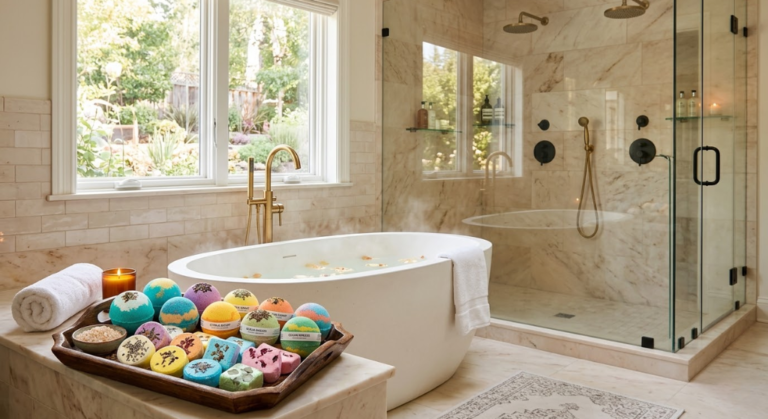
In most current markets, a quality walk-in shower in the primary bathroom is more appealing to a majority of buyers than a standard alcove tub — particularly for adult households. However, a tub retains its value as the preferred option for families with young children and for homes in starter-home price points where versatility matters more than luxury. The most valuable setup is a home that offers both: a walk-in shower in the master bath and a tub in a secondary bathroom.
What is the ROI on a bathroom remodel in 2026?
According to the Journal of Light Construction’s 2025 Cost vs. Value Report, a midrange bathroom remodel costs an average of $26,138 and returns $20,915 at resale — an 80% ROI. A tub-to-shower conversion as a standalone project tracks at 60–70% ROI. Upscale bathroom remodels have lower ROI (around 45%) because the cost premium is not proportionally recovered at most price points.
The Verdict: Should You Convert Your Tub to a Shower?
A tub to shower conversion is a smart home investment when the conditions are right: another tub remains in the home, the conversion is done at mid-range quality with neutral design, and the work is professional and permitted. Expect 60–70% ROI on a well-executed project — meaning a $7,000 conversion adds approximately $4,500–$5,000 to your home’s resale value, while also improving your daily quality of life for every year you remain in the home.
The one absolute rule: never remove the last bathtub in a home you plan to sell. Everything else — materials, fixtures, design choices, timing — is a matter of optimization. That rule is foundational. Get it right, execute thoughtfully, and your tub-to-shower conversion will be one of your best home improvement investments.
Explore the Best Shower Upgrades →