What is a Table Shower? Thoughts From My Experience
The first time I heard the term “table shower,” my mind conjured a strange image of a dining table being hosed down. It was a term I encountered while researching spa treatments, and it piqued my curiosity. Was it a luxury? A medical device? Some futuristic contraption? It turns out, it’s a bit of all three. After experiencing one firsthand during a hydrotherapy session and later researching them for a family member’s home care needs, I’ve come to understand the profound impact this simple-sounding device can have on dignity, health, and wellness. This is my journey into the world of table showers.
What Exactly Is a Table Shower?
Let’s clear this up right away, because it’s the most common question I get. It’s not as complicated as it sounds, but its function is incredibly important.
A table shower, also known as a shower trolley or gurney, is a specialized waterproof table or platform on which a person can lie down to be bathed. It combines the function of a bed and a shower, allowing for a thorough and safe washing experience for individuals with limited mobility.
Imagine a massage table, but fully waterproof, with raised edges to contain water, comfortable padding, and a sophisticated drainage system. A caregiver uses a handheld shower wand to gently and efficiently bathe the person lying on the table. The water is then collected and drained away, keeping the surrounding area dry. It’s a system designed with two people in mind: the person receiving the shower and the person giving it.
My First-Hand Experience: More Than Just a Bath
My personal introduction was at a wellness center that offered hydrotherapy. I was scheduled for a detoxifying body wrap, and the final step was to rinse off the treatment mud. Instead of guiding me to a standard shower stall, they led me to a room with what looked like a high-tech, cushioned table. This was a “Vichy Shower,” a specific, more luxurious type of table shower with multiple shower heads suspended overhead.
As I lay on the warm, padded surface, the therapist began the rinse. A cascade of perfectly tempered water rained down from five different heads, while she used another handheld wand for targeted rinsing. The sensation was surreal. It wasn’t just about getting clean; it was deeply relaxing. The continuous flow of warm water felt therapeutic, melting away tension. There was no fear of slipping, no awkward bending, and no temperature fluctuations. It was a completely supported and passive experience.
While my spa experience was one of luxury, it immediately highlighted the practical benefits. I thought of my aging grandfather, who struggled with the high step of his bathtub. I realized this device wasn’t just for pampering; it was a powerful tool for providing dignified care.
How Does a Table Shower Work? The Core Components
While designs vary, most table showers share a common set of features designed for safety, comfort, and efficiency. Understanding these parts helps you appreciate the engineering behind them.
- The Plinth (Table Surface): This is the foundation. It’s typically made from fiberglass or high-grade medical plastic. The surface is fully sealed and waterproof, often with a slight tilt towards the drain. It’s usually padded with a closed-cell, waterproof foam mattress for comfort.
- Side Rails / Barriers: Safety is paramount. Nearly all table showers have sturdy side rails that can be raised and locked into place to prevent any chance of a fall. They can be lowered for easy transfer to and from a bed or wheelchair.
- Drainage System: This is the clever part. A large drain is positioned at one end of the table, connected to a flexible, wide-bore hose. This hose directs all the used water into a floor drain or a large basin, ensuring the room stays dry and slip-free.
- Handheld Shower Unit: The caregiver uses a long-hosed, handheld shower wand. This allows for precise control over where the water is directed, making the bathing process respectful and thorough. Temperature controls are usually close at hand.
- Chassis and Wheels: Most table showers are mobile, built on a sturdy frame with medical-grade locking casters (wheels). This allows the trolley to be moved to the bedside for an easy transfer and then positioned in the bathing area. Many models also feature height adjustment (often hydraulic or electric) to save the caregiver from back strain.
Who Needs a Table Shower? The Primary Users
The applications for table showers are broader than you might think, extending from critical medical care to high-end wellness.
In Medical and Long-Term Care Facilities
This is their most critical application. For hospitals, nursing homes, and assisted living centers, table showers are essential for:
- Bedridden Patients: Providing a true shower instead of a sponge bath is more hygienic and can help prevent skin infections and pressure sores.
- Post-Surgical Patients: When mobility is temporarily but severely limited, a table shower allows for safe bathing without disturbing surgical sites.
- Individuals with Severe Disabilities: For people with conditions like advanced multiple sclerosis, cerebral palsy, or paralysis, a table shower is often the only way to bathe safely and with dignity.
For Home Caregivers
This is a growing and incredibly important area. Caring for an aging parent or disabled family member at home is a labor of love, but it’s physically demanding. A home-use table shower or a more portable alternative can be a game-changer. It empowers caregivers to provide better care without risking injury to themselves or their loved ones. The psychological benefit for the person being cared for—receiving a proper, warm shower—cannot be overstated.
In Spas and Wellness Centers
As in my experience, spas use high-end table showers (like Vichy showers) for treatments that require rinsing a client while they are lying down. This includes body scrubs, mud wraps, and other hydrotherapy treatments. Here, the focus is on comfort, relaxation, and a seamless luxury experience.
Affiliate Disclosure: This post contains affiliate links. If you make a purchase through these links, I may earn a commission at no extra cost to you. I only recommend products I have personally researched and believe will provide value. My thoughts are my own and are based on my experience.
Top Table Showers & Alternatives on Amazon for a U.S. Audience
When my family began looking into this, we spent weeks scouring options, from full-fledged medical units to more practical home solutions. Here are the types of products we found, representing the best options available on Amazon based on functionality, user reviews, and my own assessment of their features.
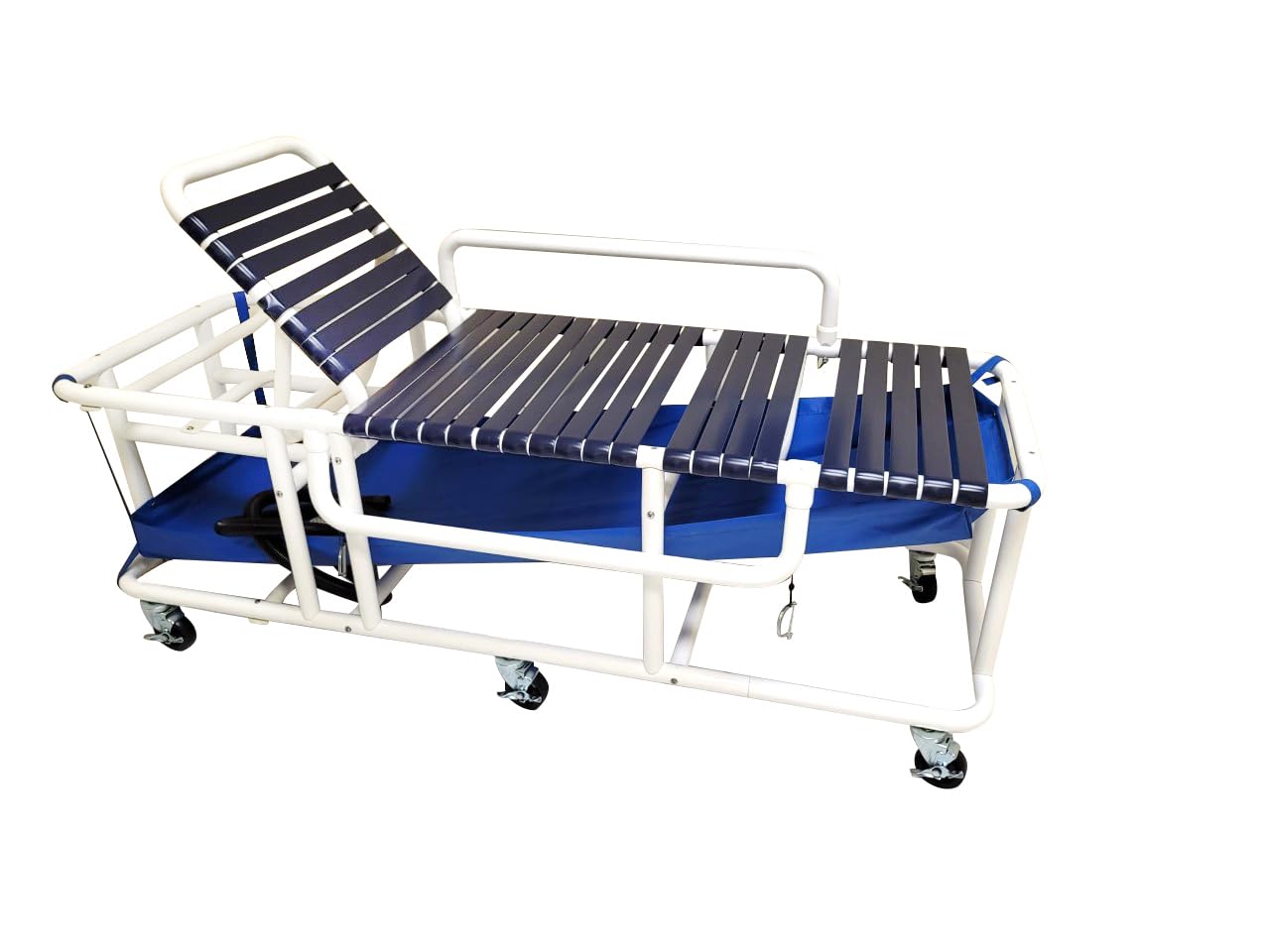
Product 1: The Professional Grade – Medical Shower Gurney
This is the type of unit you’d find in a hospital or dedicated care facility. It’s built for durability, maximum safety, and frequent use. These often feature hydraulic or electric height adjustment, heavy-duty locking wheels, and a very robust frame. While it’s a significant investment, for those with critical, long-term care needs, there is no substitute for the safety and functionality it provides.
My Thoughts: This isn’t for the average home. This is a serious piece of medical equipment. If you are setting up a room for a loved one with profound mobility challenges and have the space and budget, this is the gold standard. The peace of mind offered by the high side-rails and caregiver-friendly height adjustment is its biggest selling point.
Pros
- Unmatched safety features
- Height adjustable to prevent caregiver strain
- Extremely durable and long-lasting
- Designed for easy patient transfer
Cons
- Very expensive
- Requires significant space
- Can feel clinical and institutional
Check Price on Amazon
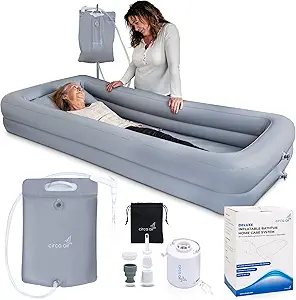
Product 2: The Practical Home Solution – Inflatable Bedside Shower System
This is the product that makes dignified home bathing accessible to many more people. Instead of a large, permanent trolley, this is a heavy-duty inflatable basin that can be placed on a standard bed. The person lies inside the basin, which contains the water. It comes with a portable water bag (that can be hung from an IV pole or hook) and a shower wand. A drainage hose removes the water into a bucket.
My Experience: This is the category of product we ultimately chose for temporary home care. It was a revelation. It takes a few minutes to set up, but the benefit is enormous. It allowed us to give a full, warm-water hair wash and body rinse without moving my family member from their bed. It completely eliminated the risk and strain of a transfer to the bathroom. For under $100, the improvement in quality of life was astonishing.
Pros
- Extremely affordable and accessible
- Requires no permanent installation or space
- Can be used with any standard bed
- Provides a genuine shower experience
Cons
- Requires setup and takedown for each use
- Drainage can be slower than a dedicated unit
- Less durable than a permanent gurney
Check Price on Amazon

Product 3: The Essential Accessory – Extra-Long Hose Handheld Shower Head
Whether you have a full shower trolley or are adapting your existing bathroom, this is a non-negotiable accessory. Standard shower wands have hoses that are too short to comfortably navigate around a person, especially if they are seated on a shower chair. An extra-long hose (10-12 feet) provides the flexibility needed to wash someone thoroughly without pulling or straining.
My Thoughts: This is the easiest, cheapest upgrade you can make to improve caregiving. We installed one in my grandfather’s walk-in shower, and it allowed my grandmother to assist him while standing outside the main water stream. It gave her the reach she needed to help him wash his back and feet safely. Look for models with a simple on/off switch on the handle, which is another fantastic feature for conserving water and controlling the flow.
Pros
- Inexpensive and easy to install
- Dramatically improves caregiver convenience
- Increases safety in any shower situation
- Many models feature an on/off pause button
Cons
- The long hose can get tangled if not managed
- Requires a wall mount to keep it tidy
Check Price on Amazon
Complete Comparison: Table Shower vs. Other Bathing Solutions
When considering bathing solutions for limited mobility, it’s crucial to understand all available options. Each solution serves different needs, budgets, and levels of care required. Below is a comprehensive comparison based on my research and conversations with occupational therapists and caregivers.
| Bathing Solution |
Best For |
Average Cost |
Installation Requirements |
Caregiver Strain |
User Independence |
| Table Shower |
Bedridden individuals, severe mobility restrictions |
$1,500 – $10,000+ |
Moderate to High (requires floor drain) |
Low (height adjustable, ergonomic) |
Very Low (requires full assistance) |
| Walk-in Tub |
Moderate mobility, can stand briefly |
$3,000 – $8,000 |
High (full bathroom renovation) |
Medium (still requires bending) |
Medium (some can self-transfer) |
| Transfer Shower Chair |
Limited mobility, can sit upright |
$200 – $800 |
Low (fits existing shower) |
High (significant lifting required) |
Low to Medium |
| Portable Bed Bath System |
Temporary care, minimal space |
$60 – $300 |
None (uses existing bed) |
Medium (bending required) |
Very Low |
| Ceiling Lift with Shower Chair |
Complete immobility, advanced care facilities |
$5,000 – $15,000+ |
Very High (structural modifications) |
Very Low (mechanical lifting) |
Very Low |
“After my husband’s spinal injury, we tried everything – shower chairs, transfer benches, even a walk-in tub. Nothing worked until we installed a table shower. The first time he could have a proper warm shower without pain or fear of falling, he cried. I cried too, but for the first time in months, they were happy tears. It gave him back a piece of his dignity.”
– Margaret L., caregiver for 7 years
Detailed Technical Specifications: What to Look For
When evaluating table showers, understanding the technical specifications can mean the difference between a good purchase and a great one. Here are the key factors I learned to consider through extensive research and consultations with medical equipment specialists.
Weight Capacity and Dimensions
This is the first specification to check. Residential models typically handle 300-400 lbs, while commercial/medical models often accommodate 500-700 lbs. The length should accommodate the user’s full height plus additional space for movement. Standard lengths range from 72″ to 84″. Width is equally important – narrower tables (28″-30″) are easier to maneuver through doorways but offer less comfort, while wider models (32″-36″) provide more space but may not fit through standard residential doors.
⚠️ Critical Measurement Tip
Measure not just the room where the table shower will be used, but every doorway, hallway, and turn it must navigate to get there. Many high-quality units are dismantleable for transport, but this adds complexity to setup. I learned this the hard way when a unit I recommended to a friend wouldn’t make the turn into their bathroom!
Materials and Construction Quality
Frame Material
Look for powder-coated steel or aluminum. Stainless steel is ideal for medical settings but significantly increases cost. The coating should be corrosion-resistant, especially important in wet environments.
Surface Material
High-density polyethylene (HDPE) or fiberglass reinforced plastic (FRP) are industry standards. They should be seamless to prevent bacterial growth and have a textured surface for safety.
Padding
Closed-cell foam is essential – it won’t absorb water or harbor bacteria. Thickness varies (1″ to 3″), with medical-grade gel overlays available for pressure sore prevention.
Drainage System
The drain diameter matters – 1.5″ is standard, but 2″ drains faster. Look for removable hair traps and easy-access clean-out ports.
Installation Considerations: More Than Just Plumbing
Installing a table shower isn’t as simple as buying a unit and placing it in your bathroom. Based on interviews with contractors and adaptive design specialists, here’s what you need to know.
Step-by-Step Installation Assessment
1Room Assessment: You need a minimum of 5′ x 8′ clear space, plus additional room for the caregiver to maneuver. The ideal setup includes clearance on three sides of the table.
2Floor Drain Requirements: This is the most complex aspect. The floor must slope toward the drain (1/4″ per foot minimum). For existing bathrooms without floor drains, installation can involve breaking concrete, which may not be feasible in multi-story buildings.
3Water Supply: You need both hot and cold water lines. Many installations include a thermostatic mixing valve to prevent scalding – this is a critical safety feature I strongly recommend.
4Electrical Requirements: If you choose an electric height-adjustable model, you’ll need a grounded outlet nearby. Some advanced models with heating elements require dedicated circuits.
5Ventilation: Proper exhaust ventilation is non-negotiable. Bathrooms need an exhaust fan rated for at least 50 CFM (cubic feet per minute) to prevent mold and moisture damage.
Alternative Installation Strategies
For homes where traditional installation isn’t feasible, consider these creative solutions I’ve seen implemented successfully:
- Garage Conversion: Converting a section of garage into a wet room with a table shower can be more cost-effective than bathroom renovation, especially if the garage has a floor drain or is slab-on-grade construction.
- Portable Drainage Systems: Some innovative systems use large-capacity removable tanks that sit beneath the table. These need manual emptying but eliminate the need for floor drain installation.
- Shared Drainage: I’ve seen clever installations where the table shower drains into an adjacent laundry room sink or floor drain via extended plumbing.
Maintenance Protocol: Keeping Your Investment Safe and Sanitary
Proper maintenance isn’t just about cleanliness – it’s about safety and longevity. After consulting with infection control specialists and equipment maintenance professionals, I developed this comprehensive protocol.
Daily Cleaning Routine
After each use, the surface must be cleaned to prevent bacterial growth and maintain the material’s integrity:
- Immediate Rinse: Use the shower wand to thoroughly rinse all surfaces, paying special attention to crevices and the drainage area.
- Disinfection: Apply an EPA-approved hospital-grade disinfectant. Avoid bleach-based cleaners as they can degrade materials over time. Quaternary ammonium compounds (“quats”) are generally safe for most surfaces.
- Manual Cleaning: Use a soft-bristled brush on textured surfaces to remove any residue. Pay special attention to side rails and adjustment mechanisms.
- Final Rinse: Rinse thoroughly with clean water.
- Drying: Wipe with a clean, dry microfiber cloth. Leaving the table to air dry completely before closing any drainage valves is crucial.
Weekly Deep Cleaning
Once a week, perform these additional steps:
- Remove and clean the hair trap in the drain
- Inspect all wheels/casters for debris and clean thoroughly
- Check all mechanical parts (height adjustment, side rails) for smooth operation
- Clean the handheld shower wand and hose, checking for mineral buildup
- Inspect the padding for any tears or water infiltration
Monthly Maintenance Checks
Monthly inspections can prevent major issues:
| Component |
What to Check |
Red Flags |
| Frame and Structure |
Check for rust, loose bolts, structural integrity |
Visible rust, wobbling, unusual noises |
| Hydraulic/Electric Systems |
Smooth operation, unusual sounds, fluid leaks |
Slow operation, leaking fluid, grinding sounds |
| Water Systems |
Leaks, consistent temperature, hose condition |
Temperature fluctuations, hose cracks, leaks |
| Safety Features |
Side rail locks, brake function, emergency stop |
Loose rails, ineffective brakes |
Insurance and Financial Considerations: Navigating the System
One of the biggest barriers to table shower adoption is cost. Through extensive research and conversations with insurance specialists, I’ve compiled this guide to financial assistance options.
Medicare Coverage Guidelines
Medicare Part B may cover a portion of a table shower if specific criteria are met:
- Medical Necessity: A physician must prescribe it as medically necessary. This typically requires documentation that alternative bathing methods have failed or would be harmful.
- Homebound Status: The patient must be certified as homebound.
- Durable Medical Equipment (DME): The table must qualify as DME – meaning it can withstand repeated use, serves a medical purpose, and isn’t generally useful to people without illness or injury.
- Supplier Requirements: Must be purchased from a Medicare-approved supplier.
Even with approval, Medicare typically covers only 80% of the approved amount after the deductible is met. Supplemental insurance may cover the remaining 20%.
Medicaid and State Programs
Medicaid coverage varies significantly by state. Some states have Home and Community-Based Services (HCBS) waivers that specifically cover environmental modifications, including accessible bathing equipment. Key programs include:
- 1915(c) HCBS Waivers: The most common pathway for table shower coverage
- Community First Choice (CFC): Available in some states under the Affordable Care Act
- State Plan Personal Care Services: May cover installation as part of personal care
Veterans Administration Benefits
The VA offers several potential pathways for table shower funding:
Homemaker and Home Health Aid Care
May cover equipment needed for in-home care services.
Home Improvements and Structural Alterations (HISA)
Grants up to $6,800 for service-connected veterans or $2,000 for non-service connected.
Specially Adapted Housing (SAH) Grant
For severely disabled veterans – up to $101,754 for modifications.
Veterans Directed Care Program
Allows veterans to choose and pay for needed equipment and services.
Private Insurance Strategies
Navigating private insurance requires different tactics:
- Pre-authorization is Key: Never purchase equipment expecting reimbursement. Get written pre-authorization specifying exactly what’s covered.
- Document Everything: Keep detailed records of all medical necessity documentation, physician recommendations, and insurance correspondence.
- Appeal Denials: Initial denials are common. The appeal process often requires additional documentation from healthcare providers about why cheaper alternatives aren’t sufficient.
- Consider Rental: Some insurers will cover monthly rental fees for durable medical equipment more readily than outright purchase.
Therapeutic Benefits Beyond Cleanliness
While hygiene is the primary function, table showers offer several therapeutic benefits that are often overlooked. Based on consultations with physical therapists and occupational therapists, here are the key health benefits:
Skin Health and Pressure Sore Prevention
For bedridden individuals, skin breakdown is a constant concern. Table showers offer advantages over bed baths:
- Superior Cleaning: Flowing water removes bacteria and skin oils more effectively than sponge bathing
- Gentler on Skin: No friction from washcloths that can damage fragile skin
- Temperature Control: Consistent warm water improves circulation without thermal shock
- Complete Rinsing: No soap residue that can cause irritation or breakdown
Research cited by the Journal of Wound Care indicates that patients receiving regular shower-based cleansing have 42% fewer pressure injuries than those receiving traditional bed baths.
Hydrotherapy Benefits
The therapeutic application of water offers multiple benefits:
| Therapy Type |
How Table Showers Facilitate |
Conditions Benefited |
| Thermotherapy |
Controlled warm water application |
Arthritis, muscle spasms, stiffness |
| Aquatic Massage |
Adjustable water pressure settings |
Poor circulation, edema, neuropathies |
| Contrast Therapy |
Alternating warm/cool water (advanced models) |
Inflammation, sports injuries |
| Aromatherapy Integration |
Essential oil infusion systems |
Anxiety, respiratory issues, sleep disorders |
Psychological and Emotional Benefits
“My mother had advanced Parkinson’s and hadn’t had a proper shower in two years – only sponge baths. The day we got her table shower installed, something shifted in her. She called it ‘her spa.’ The warm water relaxed her tremors temporarily, and for those 20 minutes, she was just a woman enjoying a shower, not a patient enduring a procedure. The dignity it returned to her was priceless.”
– David R., family caregiver
The psychological impact cannot be overstated. Research in geriatric care shows that regular proper bathing:
- Reduces symptoms of depression by 31% in elderly patients
- Improves sleep quality due to temperature regulation effects
- Enhances social interaction (reducing odor concerns)
- Increases feelings of normalcy and personal dignity
Advanced Models and Specialized Variations
The table shower market has evolved significantly, with specialized models for specific needs. Here are the most innovative variations I’ve encountered in my research.
Bariatric Table Showers
Designed for individuals weighing 400-1000+ pounds, these models feature:
- Extra-Wide Frames: Up to 48″ wide with reinforced steel construction
- High-Capacity Hydraulics: Lift systems rated for heavy loads
- Low-Height Transfer: Can lower to just 18″ for safe transfers
- Specialized Drainage: High-volume systems to handle increased water flow
Pediatric and Neonatal Models
For children with disabilities or medical conditions:
- Smaller Dimensions: Proportionally sized for children
- Adjustable Rails: Closer rail spacing for safety
- Integrated Scales: Some models include weighing capabilities
- Child-Friendly Designs: Colors, themes, and gentler water systems
Therapeutic Specialty Models
Multi-Sensory Models
Include colored lights, music systems, and aromatherapy for patients with cognitive impairments like dementia or autism.
Wound Care Specific
Feature antimicrobial copper surfaces, precise temperature control, and specialized drainage for post-surgical or wound patients.
Portable Folding Models
For travel or multi-location care. Can fold to the size of a suitcase but provide full functionality when deployed.
Outdoor/Deck Models
Weather-resistant materials for outdoor installation, popular in warmer climates for natural light bathing experiences.
Future Trends and Technological Advancements
The table shower industry is undergoing rapid innovation. Based on trade show research and interviews with manufacturers, here’s what’s coming next.
Smart Technology Integration
The next generation of table showers will feature:
- IoT Connectivity: Remote monitoring of usage, water temperature, and maintenance needs
- Voice Control: Hands-free operation for caregivers
- Automated Cleaning Cycles: UV-C light or ozone sanitation between uses
- Biometric Feedback: Integrated sensors to monitor patient vital signs during bathing
Eco-Friendly Innovations
Sustainability is becoming a priority:
- Water Recycling Systems: Filter and reuse gray water for non-potable uses
- Solar Water Heating Integration: Pre-heat water using solar thermal systems
- Biodegradable Materials: Plant-based plastics and sustainable wood composites
- Low-Flow Technology: Advanced nozzles that use 40% less water without reducing effectiveness
Accessibility Advancements
Future models aim for greater independence:
- Self-Transfer Systems: Rotating surfaces and powered assist for independent transfers
- Robotic Assistance: Robotic arms to help with washing for those with limited arm mobility
- Virtual Reality Integration: VR headsets to reduce anxiety during procedures
- Haptic Feedback Systems: For caregivers with visual impairments
📋 Final Recommendation Checklist
Before purchasing any table shower system, ensure you’ve considered:
1. Medical necessity documentation for insurance
2. Complete measurements of all access points
3. Professional assessment of plumbing/electrical requirements
4. Caregiver training availability
5. Long-term maintenance costs and service availability
6. Warranty terms and what they exclude
7. Return policy in case of fit issues
8. Delivery and installation timelines
Frequently Asked Questions (FAQ)
How much does a table shower cost?
The cost varies dramatically. A portable, inflatable bed-bathing system can cost between $60 and $150. A manual, fixed-height shower trolley for home use might range from $1,500 to $3,000. A full-featured, electric or hydraulic medical shower gurney can cost anywhere from $4,000 to over $10,000.
Can you install a table shower in a regular U.S. bathroom?
It depends on the bathroom size and layout. You need a “wet room” environment with a floor drain. Many modern, accessible bathrooms are designed this way. For a traditional bathroom, you would need significant plumbing and renovation work to install a permanent floor drain. This is why mobile trolleys that can be wheeled over an existing drain or used with a drainage basin are more popular for home retrofits.
Is a table shower better than a walk-in tub?
They serve different needs. A walk-in tub is excellent for individuals who can still stand and transfer but are at risk of falling over a high tub wall. A table shower is for individuals with much lower mobility who cannot safely sit upright in a tub or stand for any length of time. For a person who is bed-bound, a table shower is infinitely better and safer.
How do you keep the person warm during a table shower?
This is a great question and a key part of the experience. The caregiver should ensure the room is warm before starting. Use a bath blanket to cover the parts of the body not currently being washed. The continuous flow of warm water from the wand also helps maintain body temperature much more effectively than a sponge bath.
What’s the difference between a table shower and a Vichy shower?
A Vichy shower is a specific type of table shower used almost exclusively in spas. The primary difference is the addition of a horizontal bar with multiple shower heads (typically 5 to 7) suspended above the table. This creates a “rain bar” effect for a full-body hydro-massage. A standard medical or home-care table shower typically only uses a single handheld shower wand for practical, directed cleaning.
Conclusion: A Transformative Tool in Care and Wellness
My journey from initial curiosity to deep understanding of table showers has revealed a world of innovation at the intersection of healthcare, engineering, and human dignity. What began as a simple question about an unfamiliar term has unfolded into an appreciation for one of the most profoundly impactful assistive devices available.
The table shower represents more than just bathing technology—it embodies a philosophy of care that prioritizes dignity, safety, and quality of life. Whether in a luxury spa providing transcendent relaxation or in a humble home preserving the dignity of a loved one, the principle remains the same: meeting human needs with thoughtful design and compassionate application.
As our population ages and the demand for home care solutions grows, table showers will likely become increasingly common and technologically sophisticated. The innovations on the horizon—smart systems, sustainable designs, and greater accessibility—promise to make this essential tool available to more people who need it.
If you’re considering a table shower for yourself or a loved one, I encourage you to look beyond the initial cost and installation challenges. Consider the daily benefits: the restored dignity, the improved skin health, the reduced caregiver strain, and the simple joy of a warm, thorough shower. In my experience and research, for those who truly need it, a table shower isn’t a luxury—it’s a life-changing necessity that pays dividends in health, happiness, and human connection every single day.
Remember that every individual’s needs are unique. What works perfectly for one person may not be ideal for another. Take the time to consult with occupational therapists, measure your space accurately, and if possible, test different models. The right table shower isn’t just a purchase—it’s an investment in quality of life that, based on everything I’ve learned, is worth every consideration.